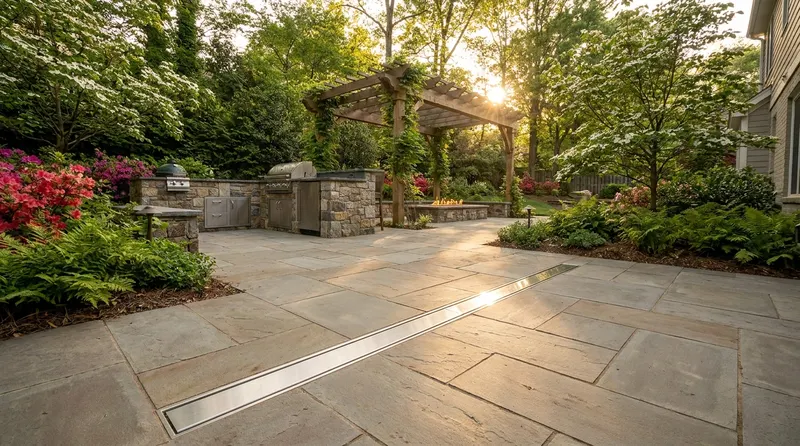
A linear drain patio Charlotte is a designed edge: a slot at a door, a hairline channel at a seat wall, or a catch-basin grate at a composed low point. Slope, joints, and the drain line keep the gathering surface looking finished after rain.
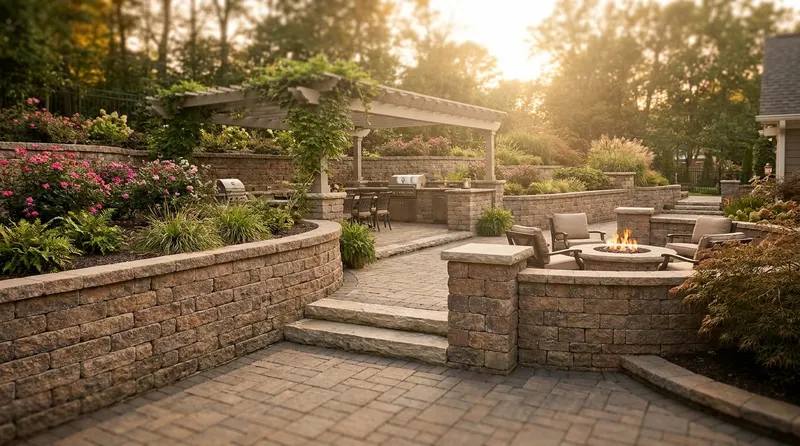
Cocktail-height seating walls are sit-on seats for drinks and fire-pit lingering, while dining-height walls are sit-at surfaces for meals. Most Charlotte patios that work well use both heights in different outdoor rooms.
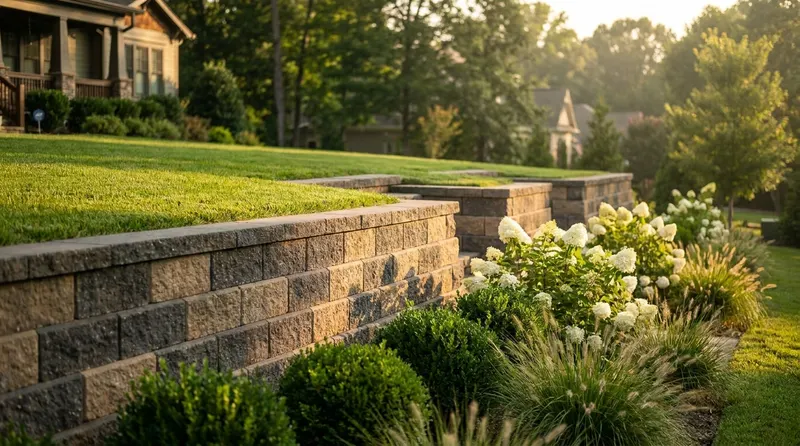
On a Charlotte slope, a retaining wall can hold grade and frame a patio or lawn as an outdoor room. Segmental block and natural stone garden walls both do that work; the better choice is the one whose face belongs to the house.
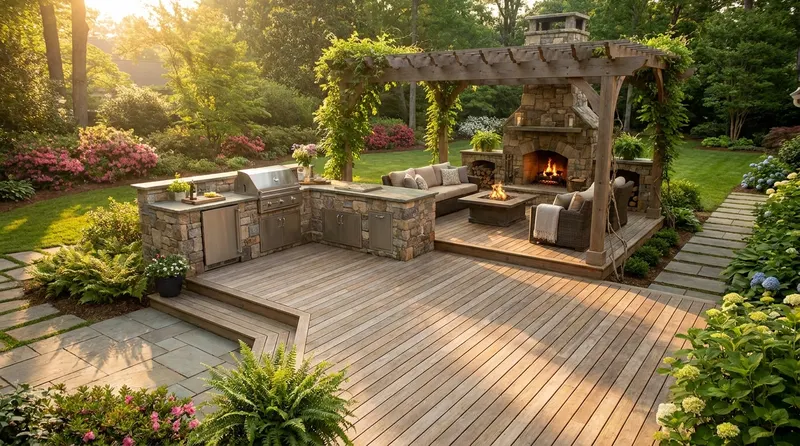
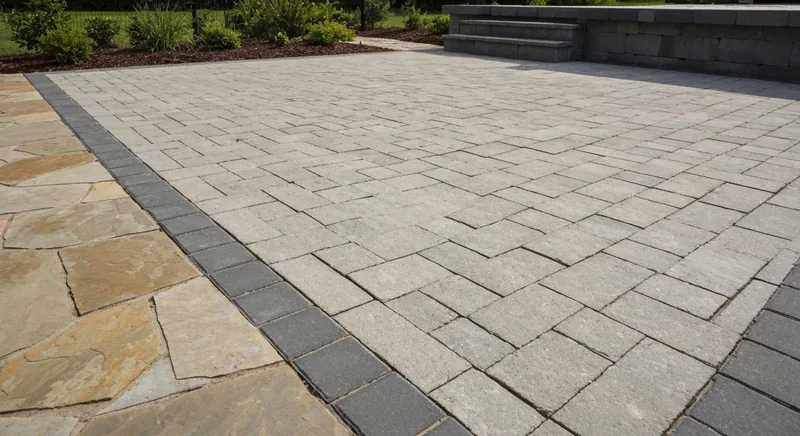
Choose hardwood for visible grain and olive-to-gold heartwood, or composite for a more even color field and a board rated to ASTM D7032. Both can sit next to a designed Charlotte paver patio.
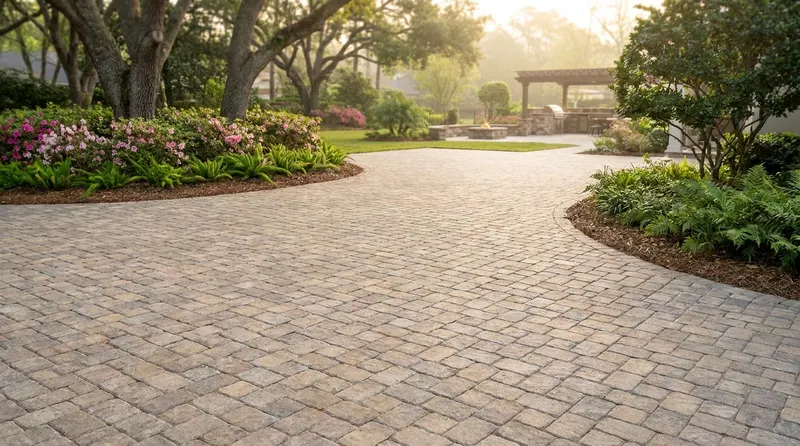
Many Charlotte homes pair a Type I concrete or asphalt street connection with a paver court from the sidewalk to the garage, so the arrival can share color and pattern with the patio. Poured concrete remains the quiet, continuous plane when the house wants a single finished field.
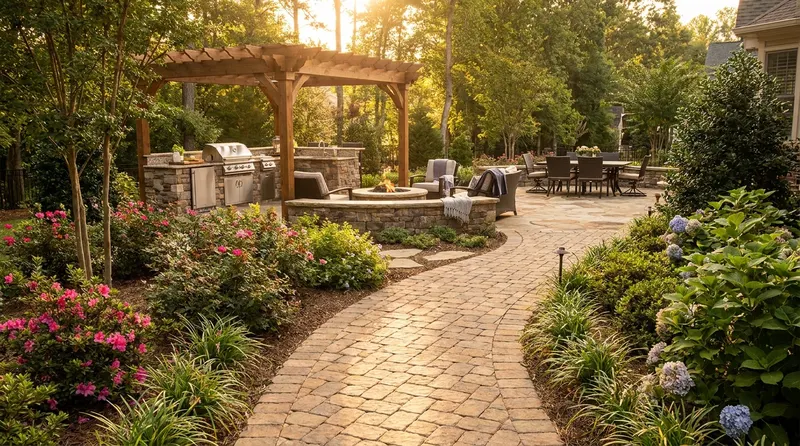
A paver walkway Charlotte homeowners use as the main arrival is a continuous, even ribbon of interlocking units from the street, drive, or gate to the door. A stepping-stone garden path is a planted, one-person walk through beds and lawn.
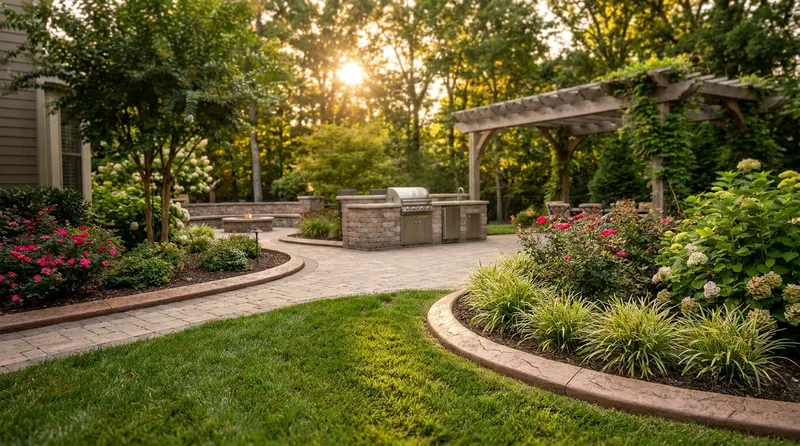
Decorative concrete curbing gives Charlotte planting beds a crisp even frame that can match nearby pavers. Natural stone edging gives texture and shadow, and many projects use both.
Why retaining walls fail usually comes down to one thing: trapped water. Here is how Charlotte's clay soil drives the failure, the warning signs to watch for, and how proper drainage prevents costly collapse.
By Mr. Outdoor Living
Cookie Settings
We use cookies to run the site, measure traffic, and improve our advertising. You can accept all, decline non-essential, or read more in our
Cookie Policy.