Landscape Curbing Charlotte: Concrete vs Stone
Opening answer (BLUF)
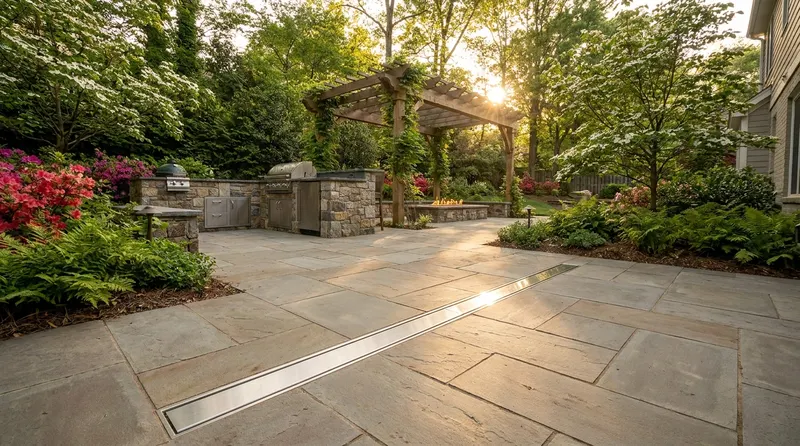
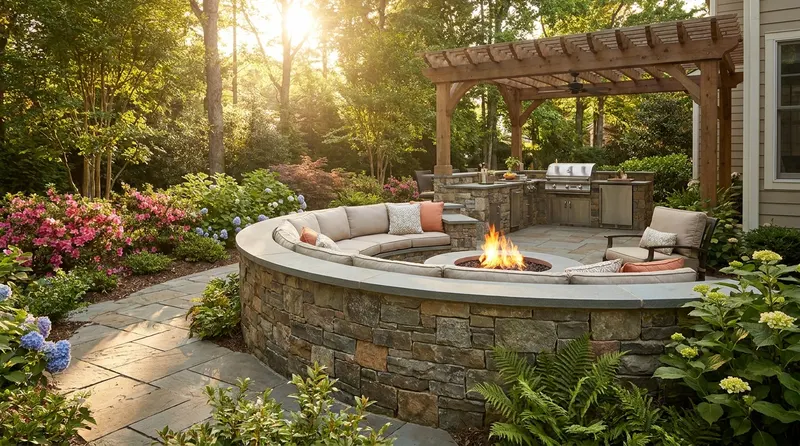
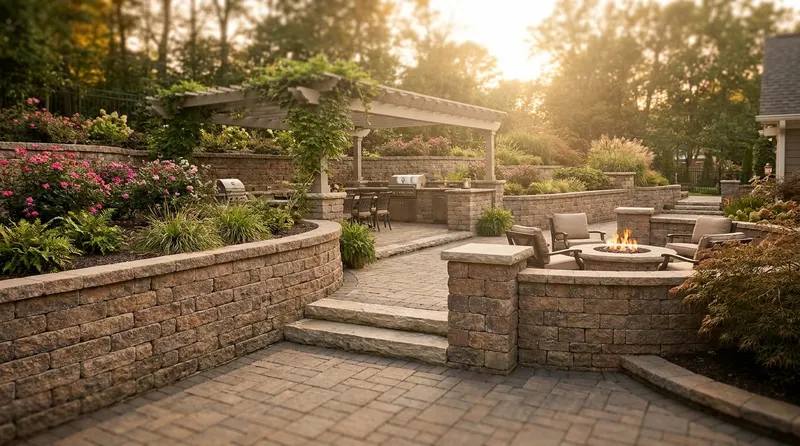
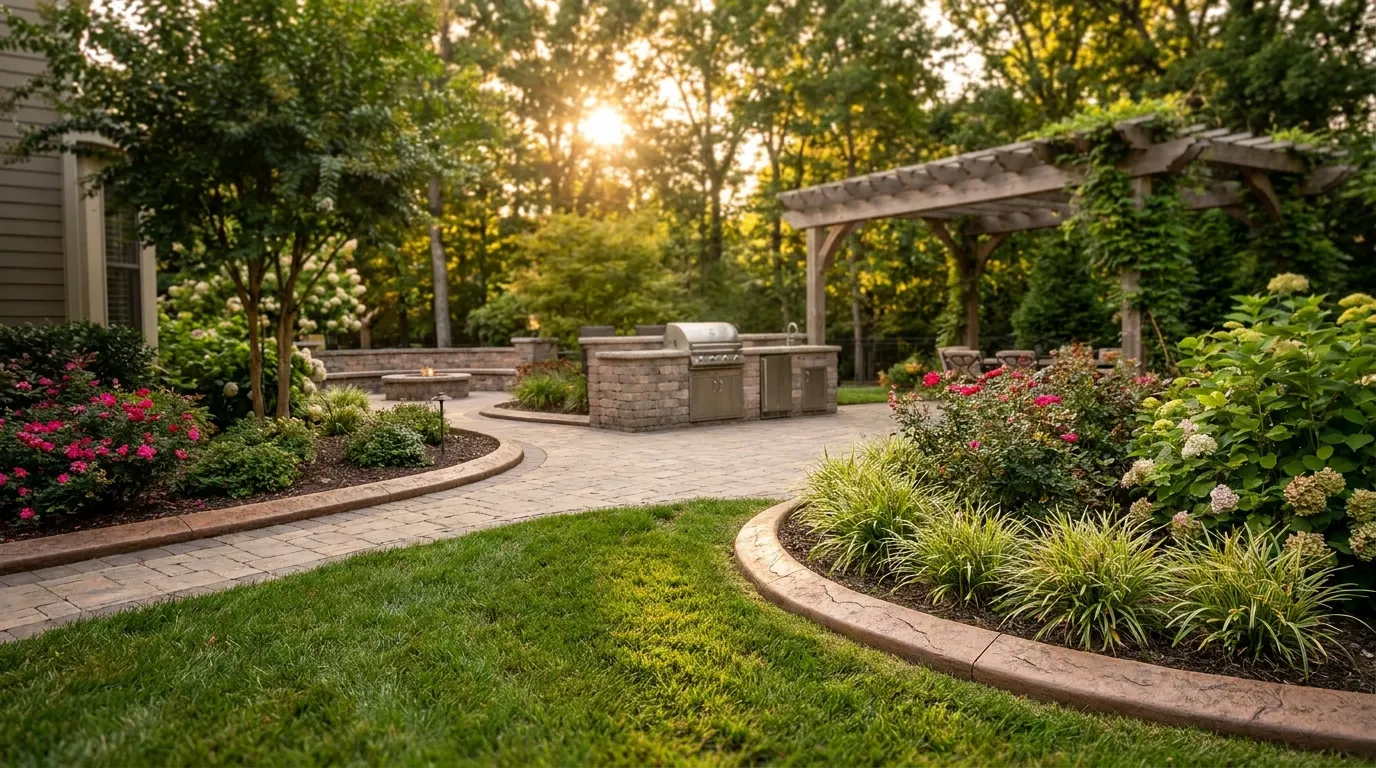
The finished look of a Charlotte yard often lives in a quiet place: the line where planting beds meet the lawn and the patio. Decorative concrete curbing and natural stone edging both give that line a designed frame. One reads as a continuous ribbon. The other reads as gathered stone. Neither is leftover trim. Each is a design decision that tells the plants, the patio, and the house how they belong together.
If you want a crisp, even border that can pick up the color of nearby pavers, decorative concrete curbing is usually the cleaner answer. If you want texture, shadow, and a more collected Outdoor Living look, natural stone edging is the warmer one. Many of our favorite projects use both, so the bed next to the patio feels composed rather than unfinished.
At Mr. Outdoor Living, we treat landscape curbing Charlotte homeowners ask about as part of the whole outdoor room, not as a strip sketched in at the last minute. The right frame makes camellias, boxwoods, and seasonal color look placed on purpose. It also gives the patio a polished edge to sit against.
A framed bed is part of the outdoor room
Walk out onto a well-built patio and your eye does not stop at the last paver. It keeps moving into the plants. NC State Extension teaches that a landscape feels unified when the parts are grouped so they read as one composition, and that strong, observable lines help create that unity. [1] The bed edge is one of those lines.
A framed bed also changes how plants sit in the picture. Extension designers recommend grouping shrubs and trees with similar needs in mulched beds with curved edges, rather than scattering plants through the lawn. [1] The frame holds that grouping so the planting reads as a composition next to the house and patio.
Clemson Extension notes that planting beds with a continuous edge live more comfortably in a design than many isolated plantings, and that a very attractive edging can be built of pavers or brick laid flush with the lawn. [2] Decorative concrete curbing and natural stone do the same visual work in different voices. One is a poured or formed ribbon. The other is assembled stone.
We also listen to how the ground plane is defined. NC State describes the ground as the floor of the landscape, and it notes that a clearly defined surface tells people where to walk and where the garden begins. [1] Edging is one of the transitions between that floor and the vertical plane of shrubs and walls. [1] When the patio, the lawn, and the planting each have a clear edge, the whole Outdoor Living space feels settled.
Decorative concrete curbing: a continuous designed line
Decorative concrete curbing is the more architectural of the two. It can follow a long, even curve around a foundation bed, wrap a lawn island, or pick up the geometry of a patio. Color, stamp, and profile let us echo the house brick, the paver field, or a quieter charcoal line that recedes so plants can lead.
Because it is a continuous material, concrete curbing gives a very even visual finish. The shadow line stays consistent. The top of the curb can sit just proud of the mulch so the planting looks held, not loose. That evenness is especially welcome beside a formal patio, a straight walk, or a house with strong horizontal lines.
The same material family also works hard next to pavers. The Concrete Masonry and Hardscapes Association explains that edge restraints are essential to interlocking concrete pavements. They hold the units tightly together, and they are designed to remain stationary through installation, vehicle loads, and freeze-thaw cycles. [3] Poured-in-place concrete curbs are a suitable restraint, and precast concrete is another proven option. [3] [4] When we design landscape curbing Charlotte patios can meet, we are often solving two things at once: a finished bed frame and a clean, stable edge for the hardscape.
Factory-made concrete paving units used in those patios typically meet ASTM C936 when produced by association members, with a common pedestrian thickness of 2 3/8 inches. [4] Decorative concrete curbing is not the same product as a patio paver, yet it belongs to the same design language of formed concrete. That is why a colored or stamped curb can sit so comfortably next to a patio without asking the plants to do all the finishing work.
A concrete ribbon also keeps the mulch layer where the planting design wants it. NC State Extension recommends applying organic mulch 3 to 4 inches deep in perennial landscape beds and staying at or below 4 inches so plants stay healthy and the surface still looks composed. [5] A firm curb holds that depth so the bed has a level, finished plane from shrub to edge.
Natural stone edging: texture, shadow, and character
Natural stone edging tells a different story. Flagstone, tumbled cobble, stacked stone, garden boulders, and river jacks each catch light in their own way. The line is still designed, but it has more grain. Shadows break along the faces of the stone. The planting looks gathered, as if the bed and the patio grew up together.
On our curbing page we talk about Swiss Sparkle Flagstone, Belgard Anglia and Weston Wall edging, one-man-sized boulders, and mixed river rock or river jacks. Those options let us match a more rustic patio, a woodland corner, or a dry creek that already uses stone. The visual finish is richer and less uniform, which is exactly what some homes want.
CMHA also lists cut stone among the edge restraints that can hold an interlocking pavement. [3] [4] That matters when a stone border is doing double duty: framing the planting and finishing the patio. Full-depth cut stone can sit on compacted aggregate and read as both garden edge and hardscape detail. [3] Soil alone is never a suitable restraint for pavers. [3] The stone has to be set with the same care we give the patio itself.
Stone is also generous with plant definition. A low flagstone soldier course can sit flush with the lawn, which Clemson describes as a very attractive edging. [2] A boulder line can step up and become a small retaining gesture, so a bed of camellias or loropetalum sits a little higher than the lawn and feels more like a designed terrace.
River jacks and river rock give a softer, collected edge. They work well where a downspout already wants a dry look, or where we want the planting to feel a little looser against a patio. The frame is still there. It is simply wearing a more relaxed outfit.
How the edge defines the planting
A planting without a frame can be beautiful, yet it rarely looks finished next to a patio. The plants need a place to begin. The mulch needs a place to stop. Your eye needs a line to rest on before it moves into the foliage.
NC State’s landscape chapter treats line as a way to draw the viewer through the design by grouping plants and hardscape. [1] A curb or a stone border is that line made physical. It can be a gentle curve that softens a rectangular patio, or a straight run that continues a walkway. Either way, the plants read as a set.
Mulch is part of that picture. Extension guidance describes mulch as a surface layer that reduces evaporation and keeps roots cooler, while also limiting compaction and erosion. [6] In perennial beds, that layer is most effective at 3 to 4 inches. [5] Decorative concrete curbing holds a very even mulch height. Stone can hold the same depth, with a slightly more textured lip. Both give the planting a finished plane so the first row of shrubs sits cleanly above the lawn.
We also think about Piedmont soil. Much of the subsoil in North Carolina’s Piedmont has high clay content, often called heavy soil, and it can move water slowly and stay wet for long periods. [7] A designed edge helps us keep the planting bed as its own room: slightly raised, clearly outlined, and ready for the shrubs and perennials we choose together. The frame does not change the clay by itself. It does let the bed look intentional while we build better soil inside it.
Plant choice still leads the design. The 2023 USDA Plant Hardiness Zone Map is the standard tool for matching perennials to winter cold, based on average annual extreme minimum temperature. [8] In the North Carolina Piedmont, Chapel Hill moved from Zone 7b to Zone 8a on that 2023 map, with average extreme winter lows of 10 to 15 degrees Fahrenheit. [9] At Charlotte Douglas International Airport, long-term records place the average first fall freeze around November 5 and the average last spring freeze around April 1. [10] Those dates help us time color and choose shrubs that look at home inside the frame we build.
Tying the bed frame to the patio hardscape
This is where landscape curbing Charlotte projects either feel complete or feel like two separate jobs. The patio is the floor of the outdoor room. The planting is the furnishing and the backdrop. The edge is the baseboard.
CMHA is clear that restraints belong at the perimeter of an interlocking pavement and wherever the paving material changes. [3] A decorative concrete curb can be that perimeter. So can cut stone. In both cases the restraint needs a smooth vertical face the pavers can meet, and it should never sit on the bedding sand. [3] When we install a patio and a bed in the same composition, we set that meeting line first in the design, then in the field.
Clemson’s design notes also ask that sidewalks, patios, and bed edging stay low and flat enough to share grade with the lawn. [2] That is a visual courtesy as much as a practical one. A proud, jagged edge fights the patio. A low, considered edge lets the hardscape and the planting share one plane.
Color and texture do the rest of the tying-in. A charcoal concrete curb can pick up the darker tones of a paver field. A tan stamped curb can echo house brick. Flagstone can repeat a stepping-stone path. Weston Wall or Anglia units can continue a patio border into the garden so the plantings feel like they belong to the same Outdoor Living plan.
We often use a sailor course or soldier course of pavers at the patio edge, then let either concrete curbing or stone take over as the bed begins. The patio keeps its tight interlock. The garden keeps its own material. The two meet on a designed line instead of a soft fade.
Charlotte winters are generally mild, yet they are not empty of freeze and thaw. The State Climate Office notes that Charlotte’s annual average snowfall is about 3.5 inches, even if a single winter can bring much more. [11] CMHA designs edge restraints to stay put through those cycles. [3] That is why we compact the base, set stone or form concrete on a proper foundation, and treat the bed frame as hardscape, not as a decoration set on top of soil.
Which frame fits your home
Choose decorative concrete curbing when you want:
- A continuous, even line around long beds
- A color that can be tuned to the patio or house
- A quieter frame that lets plants and hardscape lead
- A clean meeting point with interlocking pavers
Choose natural stone edging when you want:
- Visible texture and shadow
- A collected look beside flagstone, boulders, or a dry creek
- A frame that can step, stack, or thicken into a small wall
- Plantings that feel gathered rather than outlined
Choose both when the patio deserves a tight concrete or paver restraint and the farther beds deserve stone. Many Charlotte homes look their best with a concrete ribbon beside the main living patio and stone along the more garden-like edges of the yard.
Style of the house matters. A newer South End or Ballantyne elevation often likes the even finish of decorative concrete. A Myers Park or older Matthews home may prefer flagstone or cobble. We do not force one material on every street. We walk the property, look at the patio plan, and sketch the frame that makes the planting look finished.
Practical takeaways
- Start with the finished picture: a framed bed sitting cleanly against the patio, not a leftover strip of mulch.
- Let the edge be a real design line. NC State treats strong lines and grouped, mulched beds as part of a unified landscape. [1]
- Keep organic mulch in the 3 to 4 inch range so the planting surface looks full without burying the plants. [5]
- If the edge also finishes a paver patio, treat it as a true restraint. Concrete and cut stone can do that work. Loose soil cannot. [3]
- Match the voice of the material to the house. Continuous concrete reads tailored. Stone reads collected.
- Plan the meeting of patio, lawn, and planting as one composition so the Outdoor Living space feels complete.
- Ask us for a free design conversation and transparent pricing before you choose a material. The right frame is easier to love when you can see it on your own property.
How we can help
We are a family-owned Outdoor Living firm, and we have been designing and installing custom landscapes around Charlotte and the nearby Carolinas for more than 25 years. Landscape curbing is one of the services we install, and we like it best when it is drawn with the patio and the plantings from the first sketch.
During DesignTime we walk the property with you. We look at how the patio should meet the garden, which plants will live in the beds, and whether decorative concrete, natural stone, or a mix will give you the finished frame you want. Designs are free. Pricing is transparent. We do not invent a number before we have seen the site.
Our crew installs the edge as real hardscape: compacted base, clean lines, and a one-year workmanship warranty on the completed project. Then we set the plantings so they sit inside that frame as if they were always meant to be there.
Making Homes More Beautiful® is the promise we work from. A well-framed bed next to a patio is one of the quiet ways that promise shows up every time you walk outside.
Have more questions or want to get in touch?
https://mroutdoorliving.com/contact/
Citations
- NC State Extension, "19. Landscape Design" (2022)
- Clemson Cooperative Extension HGIC, "Low-Maintenance Landscape Ideas" (1999)
- Concrete Masonry and Hardscapes Association, "Edge Restraints for Interlocking Concrete Pavements" (2022)
- Concrete Masonry and Hardscapes Association, "Application Guide for Interlocking Concrete Pavements" (2022)
- NC State Extension, "Plan Before You Plant" (reviewed 2026)
- NC State Extension, "17. Organic Gardening" (2022)
- NC State Extension, "Modifying Soil for Plant Growth around Your Home" (2024)
- USDA Agricultural Research Service, "2023 USDA Plant Hardiness Zone Map" (2023)
- North Carolina Botanical Garden, "What does the change in Hardiness Zones mean for the Garden?" (2024)
- NC State Extension / State Climate Office of North Carolina, "Average First and Last Freeze Dates" (updated 2026; station record 1939–2019)
- State Climate Office of North Carolina, "Winter Recap 2025-26: Cool and Dry, With a Snowy Centerpiece" (2026)
Planning your own outdoor living upgrade? Explore our outdoor living services in Charlotte.