Paver vs. Natural Stone: Choosing the Patio Surface That Sets the Tone for Your Charlotte Backyard
Designing a luxury outdoor sanctuary begins with selecting the foundational surface that anchors your entire landscape. In Charlotte, North Carolina, homeowners are increasingly turning their backyards into multi-seasonal living spaces designed for relaxation, family entertainment, and refined hospitality. When embarking on a custom hardscape project, one of the most consequential decisions you will make is choosing between manufactured concrete pavers and quarried natural stone slabs. According to the American Society of Landscape Architects, "Thoughtful residential design blends beauty with performance, helping manage water, reduce heat, support biodiversity, and foster meaningful outdoor living."
Your choice of patio material establishes the color palette, tactile texture, architectural character, and structural longevity of your outdoor living environment. At Mr. Outdoor Living, our design and installation teams specialize in crafting bespoke custom paver and stone patios tailored specifically to the climate, soil conditions, and architectural styles of the Charlotte region. In this comprehensive guide, we compare the distinct advantages, visual artistry, structural performance, and investment value of a paver vs natural stone patio to help you select the ideal surface for your dream backyard.
1. Visual Artistry, Architectural Styles, and Material Aesthetics
The visual character of your outdoor living space depends heavily on whether you prefer clean geometric consistency or the organic, unrepeatable charm of natural geology. Both hardscape options offer captivating aesthetics, but they express beauty in fundamentally different ways.
Manufactured Concrete Pavers: Symmetry and Versatile Design
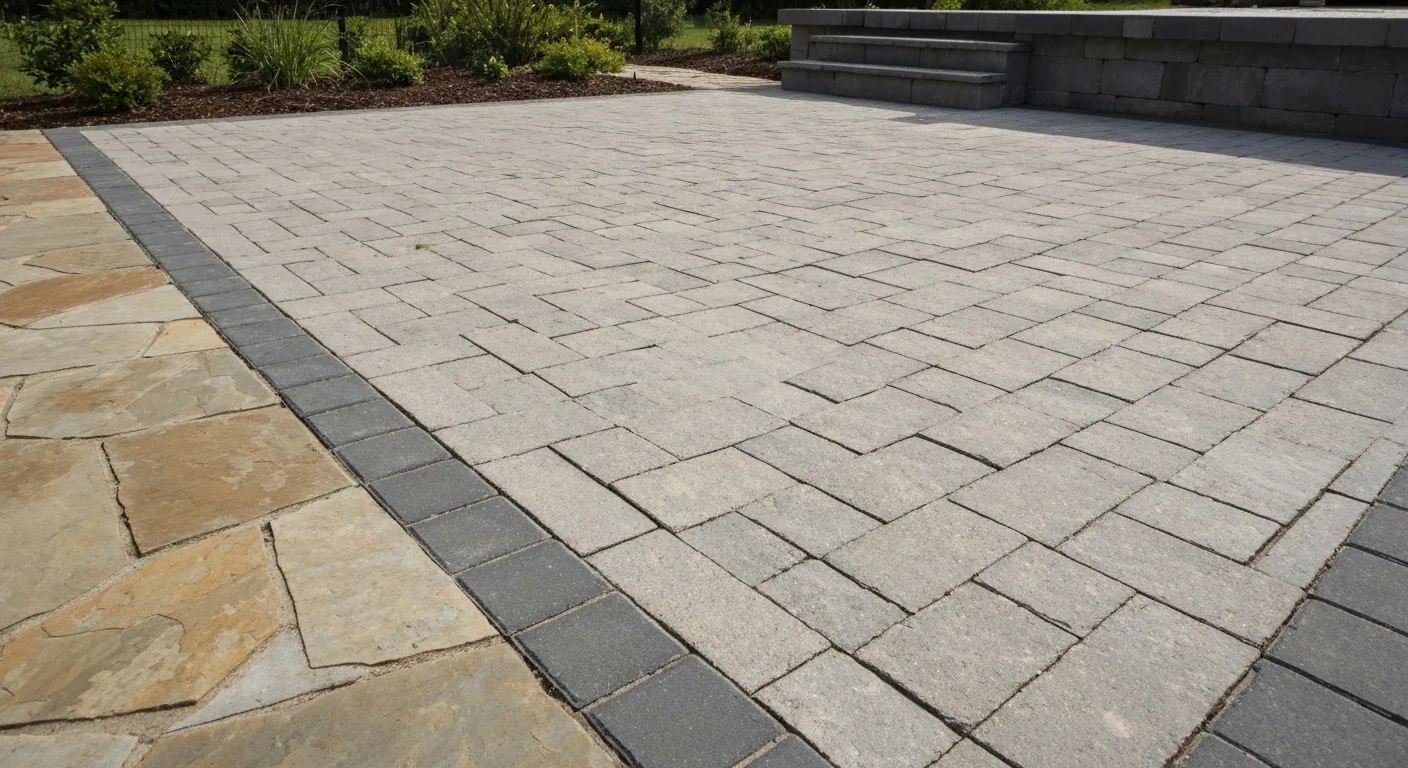
Modern concrete pavers offer unprecedented flexibility in pattern, color, and texture. Advanced manufacturing techniques allow engineered pavers to replicate everything from historic European cobblestones and rustic wood planks to sleek, large-format architectural slabs. Products from industry leaders such as Belgard Pavers and Techo-Bloc Pavers provide uniform dimensions and consistent thickness. This geometric precision creates tight, uniform joint lines that complement modern, transitional, and craftsman home exteriors. Furthermore, pavers allow designers to easily integrate contrasting borders, decorative ribboning, and intricate herringbone or ashlar laying patterns.
Quarried Natural Stone: Organic Elegance and Unique Geology
If your vision leans toward timeless, earth-born luxury, natural stone remains an unparalleled choice. Popular choices for North Carolina residences include Tennessee flagstone, Pennsylvania bluestone, dimensional slate, and cool-touch travertine. Because stone is quarried directly from the earth, no two slabs are identical. Each piece displays subtle variations in shade, mineral veining, and surface texture. As noted by the Natural Stone Institute, "Natural stone is categorized into three basic geological classifications by their respective formation processes: Sedimentary, Metamorphic and igneous." This rich geological diversity imparts an authentic, old-world elegance that matures gracefully over time, blending seamlessly with surrounding garden beds, mature trees, and rolling green lawns.
2. Structural Performance and Charlotte Subsoil Engineering
A beautiful patio must be backed by rigorous engineering to withstand heavy foot traffic, outdoor furniture loads, and local weather patterns. In the Charlotte metro area, hardscape durability is directly linked to how surface materials interact with native Piedmont subsoil.
Navigating Charlotte Clay Soils and Foundation Base Preparation
The Charlotte region is dominated by heavy Cecil clay soil. As detailed in the NC State Extension Gardener Handbook, "Clay soils, which tend to hold excessive amounts of water and become compacted easily, present some tricky problems." When clay soil absorbs moisture during rainy seasons, it expands; during summer dry spells, it contracts. If a patio foundation is installed improperly, this ground movement causes cracking, shifting, and uneven surfaces.
To overcome soil expansion, Mr. Outdoor Living engineers every project with a deep, compacted aggregate sub-base topped with washed crushed stone bedding. Concrete pavers possess high compressive strength (typically exceeding 8,000 psi) and rest as flexible interlocking units. This modular flexibility allows a paver surface to accommodate minor soil shifts without cracking individual blocks. Dense natural stone slabs, such as bluestone or granite, also offer tremendous compressive resistance. However, irregular flagstone requires meticulous hand-setting and specialized mortar or gravel bedding to guarantee long-term structural stability on clay subgrades.
3. Water Management, Infiltration, and Thermal Comfort Underfoot
Carolina summers deliver intense heat accompanied by sudden, heavy afternoon thunderstorms. High-performing outdoor spaces must handle intense solar radiation while efficiently managing surface water runoff.
Permeable Paving Systems and Rainwater Infiltration
Managing stormwater runoff is essential for preserving backyard grading and protecting home foundations. Engineered permeable paver systems are designed with wider joint gaps filled with small aggregate. As highlighted by the United States Environmental Protection Agency, "Alternatives to traditional pavement on our paved surfaces can help reduce runoff by infiltrating rain water and melting snow." Permeable paver installations capture rainwater on site, allowing it to filter naturally back into the soil sub-base while keeping your patio dry and slip-free shortly after heavy downpours.
Thermal Absorption and Summer Surface Comfort
During hot July afternoons in Charlotte, surface temperature determines whether your patio remains comfortable for bare feet. Darker natural bluestone and dark concrete pavers absorb solar energy, reaching high temperatures under direct sunlight. Conversely, light-colored natural travertine and pale sandstone feature high solar reflectance. Travertine naturally stays remarkably cool underfoot, making it a favorite material for pool decks, open sun terraces, and barefoot lounge areas. Light-toned concrete pavers also provide excellent heat reflection when selected in neutral tan, greige, or cream palettes.
4. Paver vs Natural Stone Patio: Evaluating Investment, Maintenance, and Resale Appeal
Investing in a custom hardscape enhances your daily lifestyle while adding measurable value to your property. Evaluating long-term cost, maintenance requirements, and resale return ensures your project fulfills both emotional and financial goals.
Homeowner Joy Score and Return on Investment
According to the National Association of REALTORS® Remodeling Impact Report, "Fifty-two percent feel happy, and 45% feel satisfied when they see their completed project, with a typical Joy Score of 9.7." A professionally designed patio is one of the highest-rated outdoor projects for overall homeowner satisfaction, consistently recovering a substantial percentage of its initial cost upon home resale.
Maintenance Requirements and Long-Term Surface Upkeep
Both material categories require minimal ongoing maintenance when properly installed, though their care routines differ:
- Concrete Paver Upkeep: Periodic sweeping, joint sand replenishment (using polymeric sand to prevent weed growth), and protective sealing every 3 to 5 years keep paver colors vibrant and stain-resistant. If a paver is damaged by extreme impact, individual units can be lifted and replaced seamlessly without disrupting the surrounding hardscape.
- Natural Stone Upkeep: Natural stone is highly resilient against fading from ultraviolet light. Dry-laid stone requires occasional joint clearing, while mortared stone benefit from stone-safe neutral cleaners and breathable sealers to guard against organic staining from fallen leaves or iron-rich clay mud.
5. Designing Your Ideal Outdoor Space with Mr. Outdoor Living
Rather than viewing material selection as a strict binary choice, modern landscape design often combines the best elements of both worlds. Many of our most breathtaking Charlotte projects combine smooth concrete paver fields with natural stone soldier courses, stone steps, and custom masonry fire features.
At Mr. Outdoor Living, we are dedicated to Making Homes More Beautiful®. Our turnkey process guides you from initial 3D design concepts through excavation, aggregate base compaction, and precision installation. Explore our outdoor living design gallery to see how custom hardscaping elevates homes throughout the Charlotte area.
Whether you choose the crisp geometric precision of interlocking pavers or the timeless organic beauty of natural stone, our team is ready to bring your vision to life. Contact Mr. Outdoor Living today to schedule your personalized outdoor design consultation.
Planning your own outdoor living upgrade? Explore our outdoor living services in Charlotte.