Pergola vs. Pavilion vs. Gazebo: A Charlotte Homeowner's Guide to Patio Shade Structures
If you are weighing a pergola vs pavilion vs gazebo for your Charlotte patio, the honest answer is that the roof settles most of the decision. A pergola has an open roof of slats and rafters, so it gives you dappled shade and airflow but very little protection from rain. A pavilion has a solid, pitched roof, which turns your patio into a true all-weather outdoor room. A gazebo also has a solid roof, but it sits over a rounded or eight-sided footprint and usually stands on its own as a garden destination. For most homeowners here, the choice comes down to two questions: how much rain protection do you want, and does the structure attach to your home or stand alone?
Pergola vs pavilion vs gazebo: the roof is the real difference
All three structures create shade, define a space, and raise the value of a backyard. What separates them is how the roof is built and, as a result, how much weather they keep off you.
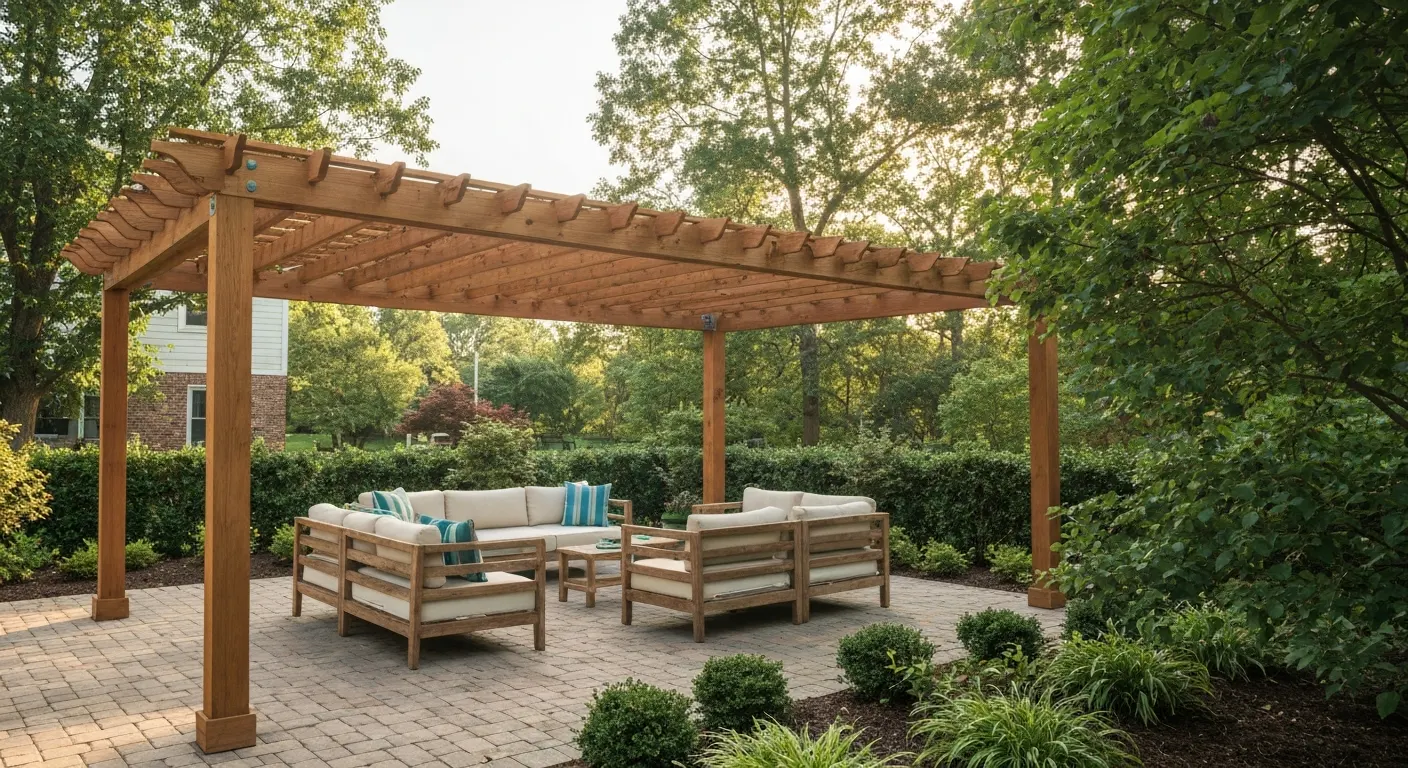
A pergola uses an open grid of beams and rafters made from wood, aluminum, steel, or vinyl. Paired with lattice or closely spaced slats, a pergola can block roughly 70 percent of direct sun, but as Bob Vila notes, a pergola provides negligible protection from rain. That openness is the point. It keeps the space bright and breezy, and it is the reason pergolas pair so naturally with a seating area or a walkway.
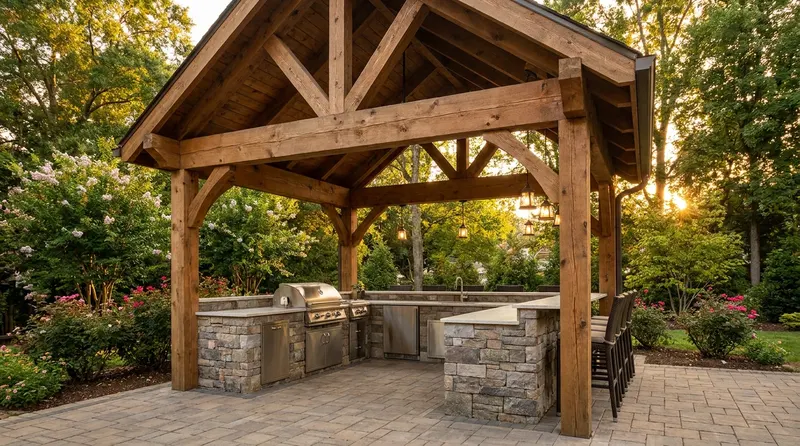
A pavilion takes the opposite approach with a solid, fully roofed structure. It behaves like an outdoor room, which is why pavilions are the usual choice when a homeowner wants to cover an outdoor kitchen, a dining table, or a television and use the space rain or shine.
A gazebo also has a solid roof, but its defining trait is geometry: a rounded or octagonal footprint that reads as a freestanding focal point rather than an extension of the house. Gazebos give full sun and rain protection and often serve as a garden retreat or a cover for a hot tub.
| Structure | Roof | Shade | Rain protection | Best for |
|---|---|---|---|---|
| Pergola | Open slats and rafters | Partial, dappled (about 70 percent with lattice) | Little to none | Airy lounging, tighter budgets, attaching to the house |
| Pavilion | Solid pitched roof | Full | Full | An all-weather outdoor room: kitchen, dining, TV |
| Gazebo | Solid roof, rounded or eight-sided | Full | Full | A freestanding garden destination or hot tub cover |
Which shade structure fits a Charlotte backyard?
Charlotte summers are hot and humid, and our afternoons have a habit of turning into a quick thunderstorm. That local reality should steer your choice more than any design trend.
If you want to actually use the space when the weather turns, an open pergola will disappoint you, because the rain comes right through. For rain-or-shine use, especially over an outdoor kitchen or a dining area, a pavilion is the more reliable pick. If you mainly want a bright, breezy lounge spot and you love the look of sunlight filtering through beams, a pergola is a beautiful and budget-friendlier answer. A gazebo makes the most sense when you want a standalone destination in the yard rather than a cover attached to the house.
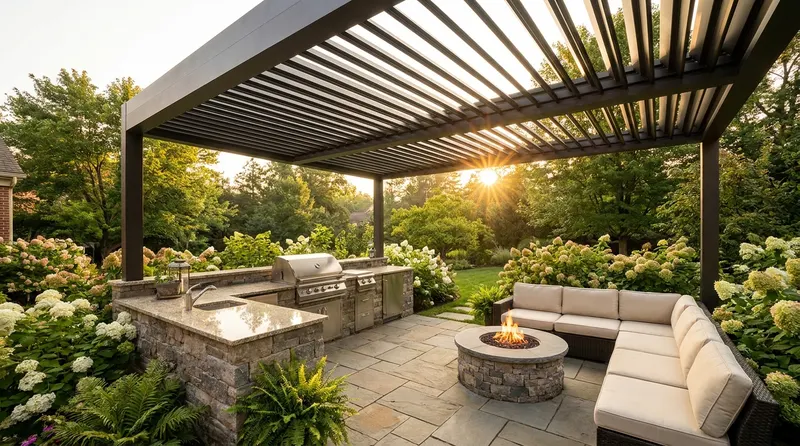
There is also a middle path worth knowing about. An adjustable louvered pergola uses movable roof slats (manual or motorized) that you can close against a passing storm and open again for sun. It is one of the most requested upgrades we hear about, because it blends a pergola's airiness with a pavilion's shelter. The trade-off is cost: as we cover below, a louvered aluminum roof sits well above a traditional open pergola. We have built covered structures over hardscapes many times, including this paver patio with a seating wall and covered pergola, and the right choice always starts with how you plan to live in the space.
What do these structures cost in 2026?
Costs vary widely by material, size, and whether the structure attaches to your home or stands on four posts. The figures below are national ranges for professionally installed structures, which give you a realistic starting point before you get a local quote. According to LawnStarter's 2026 pricing, a pergola averages about $4,000 installed, with most homeowners paying between $2,100 and $6,000. Material is the biggest single lever.
| Structure or material | Typical installed cost |
|---|---|
| Aluminum or vinyl pergola | $10 to $30 per square foot (about $1,000 to $2,500 for a 10 by 10) |
| Cedar pergola | $25 to $35 per square foot (about $2,450 to $3,250 for a 10 by 10) |
| Pergola, all-in average | About $4,000; most projects land between $2,100 and $6,000 |
| Louvered or adjustable aluminum roof | $16 to $68 per square foot (higher end for motorized systems) |
| Gazebo, comparable size | About $5,000 to $10,000 |
A few patterns hold across the sources. Fixr's 2026 data puts aluminum pergolas at $10 to $30 per square foot and cedar at $25 to $35, with louvered aluminum roofs reaching much higher because of the thicker metal and moving parts. A gazebo of the same footprint typically runs more than a pergola, roughly $5,000 to $10,000 by Bob Vila's estimate, because of the full roof and raised floor. Adding a solid roof over an existing patio is its own project as well, and This Old House's 2026 guide walks through how those covered-patio costs add up. Attaching a pergola or pavilion to the house instead of building it freestanding removes two posts, which usually trims both material and labor.
Do you need a permit for a pergola or pavilion in Charlotte?
Often, yes. In Mecklenburg County, Code Enforcement issues the building, electrical, plumbing, and mechanical permits for residential work, and North Carolina law under General Statute 160D-1110 requires a building permit for most new construction and alterations. Whether your specific structure needs a permit depends on its size, how it is anchored, and your setbacks from the property line.
A few rules of thumb are worth keeping in mind. Structures that attach to your home tie into its framing, so they typically get a structural review. Running power for fans, lights, or outlets adds a separate electrical permit. And every roofed structure has to respect your lot's setback lines. Requirements do change, so confirm your project with Mecklenburg County Code Enforcement (LUESA) at 2145 Suttle Avenue in Charlotte, or by phone at 980-314-2633, before you build. When Mr. Outdoor Living designs and builds a structure for you, we handle the permitting and inspections as part of the job, so you are not left navigating the county process alone.
How the structure works with your patio
A shade structure is only as good as the surface underneath it. Posts and footings have to be set correctly, and water has to drain away from both the patio and your foundation. That is why we plan the structure and the hardscape together whenever we can. A well-built paver patio gives a pergola or pavilion a stable, level base, and thoughtful grading keeps the whole outdoor room dry. From there it is easy to layer in the features that make a backyard feel finished, from a fire pit to a water feature.
The bottom line
- Choose a pergola for airy, dappled shade, a friendlier budget, and an easy attachment to the house. Just know it will not keep the rain off.
- Choose a pavilion when you want a genuine all-weather outdoor room for a kitchen, dining, or lounging in any forecast.
- Choose a gazebo when you want a freestanding focal point or a cover for a hot tub, and you like the classic rounded or eight-sided look.
- Consider a louvered pergola if you want adjustable shade and rain protection in one structure and the premium cost fits your plan.
- Confirm permits early with Mecklenburg County, especially for attached structures or any that carry electrical work.
Frequently asked questions about patio shade structures
What is the difference between a pergola, a pavilion, and a gazebo?
The roof. A pergola has an open, slatted roof that gives dappled shade with little rain protection. A pavilion has a solid, pitched roof that works like an all-weather outdoor room. A gazebo also has a solid roof, but it sits over a rounded or eight-sided footprint and usually stands on its own.
Does a pergola keep the rain off?
No. A traditional pergola has an open roof, so it provides dappled shade but negligible protection from rain. For rain-or-shine use, choose a pavilion or an adjustable louvered pergola instead.
How much does a pergola cost in 2026?
About $4,000 on average installed, with most homeowners paying between $2,100 and $6,000. Aluminum runs roughly $10 to $30 per square foot and cedar $25 to $35, while louvered aluminum roofs cost significantly more.
Do I need a permit for a pergola or pavilion in Charlotte?
Often yes. In Mecklenburg County, the size of the structure, how it is anchored, and your setbacks decide the requirement, and attached structures or any electrical work typically need a permit. Confirm your specific project with Mecklenburg County Code Enforcement before you build.
What is a louvered pergola?
A louvered pergola has movable roof slats, manual or motorized, that close against a passing storm and open again for sun. It blends a pergola's airiness with a pavilion's shelter, at a higher cost than a fixed open pergola.
Plan your Charlotte shade structure with Mr. Outdoor Living
Not sure whether a pergola, pavilion, or gazebo is right for your yard? We design and build custom shade structures over paver patios across the Charlotte area, and we handle the details from footings to permits. Request a design consultation on our contact page, or call us at 704-806-7260, and we will help you choose the structure that fits how you actually want to live outdoors.
Citations
- Bob Vila, "Pergola vs. Gazebo: What's the Difference?" (accessed July 2026)
- LawnStarter, "How Much Does a Pergola Cost in 2026?" (updated December 27, 2025)
- Fixr, "Cost to Build a Pergola" (2026)
- This Old House, "How Much Does Adding a Roof Over a Patio Cost? (2026 Guide)" (2026)
- Mecklenburg County Code Enforcement, "Permitting" (accessed July 2026)
- North Carolina General Assembly, "General Statute 160D-1110: Building permits" (accessed July 2026)
Planning your own outdoor living upgrade? Explore our outdoor living services in Charlotte.