Native Plants for Charlotte NC Yards: A Fall Planting Guide to Pollinator Perennials
The short answer
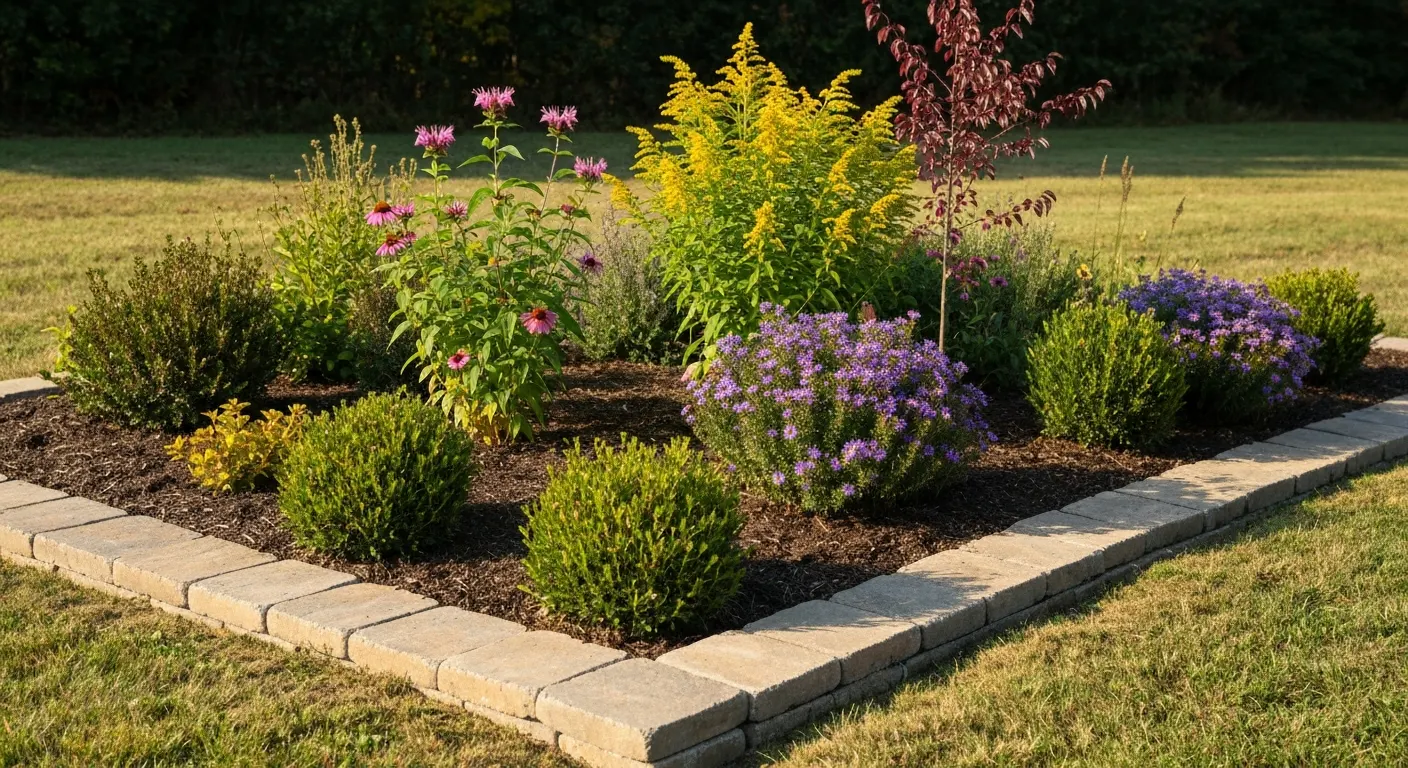
If you want a beautiful, wildlife-friendly yard that mostly takes care of itself, the best native plants for Charlotte NC yards are keystone and specialist-supporting perennials such as butterfly weed, wild bergamot, and the early-blooming Eastern redbud, installed as a designed bed this fall. Fall is peak planting season across the Carolina Piedmont, so plants set roots now and reward you next summer. Charlotte has also made this easier: the city now runs a registry that lets a well-designed native bed count as protected pollinator habitat rather than a code problem. The one honest caveat is that a native garden is low-upkeep, not no-upkeep, especially in its first year or two.
Here is the fast version before the details:
- When to plant: roughly mid-September to early December, the Carolina Piedmont's optimal fall window.
- What to plant first: butterfly weed (a monarch host), wild bergamot (bee balm), and Eastern redbud, then layer in coneflower, black-eyed Susan, goldenrod, and native asters for bloom from spring through late fall.
- Why it matters: more than one-fifth of North America's native pollinators are now at elevated risk, and native plants feed them best.
- The Charlotte advantage: a registered, well-maintained pollinator habitat is exempt from the city's old plant-height nuisance rule.
- Where to buy: two local fall plant sales land right inside the planting window.
Why native plants, and why plant them now
Pollinators are in real trouble, and that is the honest reason this kind of planting matters. A peer-reviewed continental assessment reported by NatureServe evaluated nearly 1,600 native North American pollinator species and found that 22.6 percent face an elevated risk of extinction, rising to 34.7 percent among the native bees studied, with leafcutter and digger bees among the hardest hit. Those are the small, unsung native bees that a yard full of the right plants can actually support.
The good news is that a small, well-chosen plant palette does most of the work. The North Carolina Wildlife Federation highlights the keystone-plant concept: roughly 14 percent of native plant species provide about 90 percent of the caterpillar food that fuels local food webs, which in turn feed birds and support pollinator populations. In other words, you do not need dozens of species to make a difference. You need the right anchors.
Design also matters as much as the list. The N.C. Cooperative Extension, Forsyth County Center (the same Piedmont region as Charlotte) advises planting for bloom throughout the season, because honeybees and bumblebees are generalists while many native bees are specialists with short feeding windows. A bed that flowers from early spring into late fall keeps a food source open for the widest range of pollinators, not just the few weeks of a single showy plant.
Why fall is the best time to plant in the Carolina Piedmont
Fall planting is not a nice-to-have here, it is the season that gives you the strongest plants for the least effort. The N.C. Cooperative Extension, Beaufort County Center explains the mechanism: as the air cools, a plant shifts its energy from top growth into building roots, while the soil stays warm into December. That warm soil and cooler air mean fall-planted stock needs less frequent watering than a spring or summer planting, and it comes into next summer with a stronger root system and better resilience. Extension puts the ideal window from about mid-September through early December.
That timing lines up perfectly with a native plant list. Extension's companion guide, Native Plants to Plant in Fall, names natives well suited to fall installation, including Eastern redbud among the trees and purple coneflower, black-eyed Susan, goldenrod, bee balm, and native asters among the perennials. Plant them now and they establish quietly through the cool months, ready to bloom on schedule.
The best native plants for Charlotte NC yards
Start with a few anchor species that earn their space, then build around them. These three are our foundation picks for a Charlotte pollinator garden, and each is documented in the NC Extension Gardener Plant Toolbox or the Extension fall-planting list.
| Native plant | Pollinator role | Light and soil | Notes |
|---|---|---|---|
| Butterfly weed (Asclepias tuberosa) | Larval host for monarch butterflies and a nectar source for many butterflies and insect pollinators | Full sun, dry to medium, well-drained soil | Native milkweed, drought-tolerant once established, blooms roughly May to August |
| Wild bergamot / bee balm (Monarda fistulosa) | Attracts bees, butterflies, and hummingbirds; hollow stems shelter stem-nesting native bees | Full sun, tolerates clay soil | Deer and rabbit resistant, blooms roughly June to September |
| Eastern redbud (Cercis canadensis) | One of the earliest native nectar sources of the year for emerging bees | Small tree, sun to part shade | On Extension's fall-planting list; a keystone early-spring bloomer |
Two details are worth calling out. Butterfly weed is a true native milkweed, which makes it a host plant that monarch caterpillars actually feed on, not just a nectar stop, according to the NC Extension Gardener Plant Toolbox. And wild bergamot is one of the few showy natives that genuinely tolerates our heavier clay, per its Plant Toolbox profile, which is why it earns a spot where fussier plants sulk.
Around those anchors, layer the fall-plantable natives Extension names for a longer bloom season: purple coneflower and black-eyed Susan for summer color, then goldenrod and native asters, which supply critical late-season nectar as most other flowers fade. The Wildlife Federation's native pollinator plant list adds further keystone and specialist-supporting options for the Piedmont, including passionflower and native asters, if you want to extend the palette. This is exactly the kind of layered, season-long design we build into our native perennial plantings so the bed looks intentional in every month, not just July.
Are native cultivars ("nativars") okay to use?
This question comes up on almost every design, so here is the straight answer: choose straight species by default, and treat well-chosen cultivars as acceptable case by case rather than as something to avoid. A controlled trial published in Environmental Entomology (Oregon State University, in the Pacific Northwest, so read it as a principle rather than a Carolina statistic) compared native plants against their cultivars and found the pattern below.
| Outcome of the comparison | Share of comparisons |
|---|---|
| Native plant preferred | 37.2 percent |
| Cultivar preferred | 7.7 percent |
| No measurable difference | 55.1 percent |
Read the whole picture. When there was a difference, native plants usually won, and native plantings supported greater overall bee richness. But for a slight majority of comparisons there was no measurable difference at all. The practical takeaway for a homeowner is reassuring: the straight species is the safe, generous choice, yet a thoughtfully selected native cultivar can still be a perfectly good ecological citizen. It is a judgment call per plant, not a rule to follow blindly.
Low-upkeep, not no-upkeep
The biggest myth about native gardens is that you plant them and walk away. Native landscapes are genuinely low-maintenance once established, but they still need care. Michigan State University Extension notes that every planting needs care to thrive, especially during the establishment phase, when a garden-sized native bed still wants normal hand-weeding and watering before it settles in. Expect the first one to two years to ask something of you, then enjoy the low-upkeep payoff after that.
This is the difference between a native bed that looks designed and one that slides into a weedy tangle. A professionally installed and maintained bed gets the plants spaced, mulched, watered, and edited through that establishment window, so it reads as a deliberate landscape from day one. It is also why we treat the first season as part of the job, not an afterthought.
A registered pollinator habitat, not a code violation
Here is the local twist that makes a Charlotte native bed genuinely easier than it was a couple of years ago. Historically, a naturalistic planting could run afoul of the city's nuisance vegetation rule, which capped plant height at 12 inches. As the North Carolina Wildlife Federation reported, Charlotte City Council unanimously amended that ordinance to create an exemption for properly maintained, registered pollinator habitats and naturalistic landscapes.
The N.C. Cooperative Extension, Mecklenburg County Center explains how it works: property owners can register an approved pollinator habitat or naturalistic landscape through a no-cost city registry, sign up online or by calling 311, and even appear on an interactive community map. Once registered and approved, the space is exempt from the nuisance vegetation ordinance. That reframes the whole project. A designed, well-kept native bed is not a "messy yard," it is a registered pollinator habitat, which is precisely the standard our design-and-maintain approach is built to meet.
Where to buy native plants in Charlotte this fall
You can plant natives the same weekend you buy them, because two well-known local plant sales fall inside the ideal fall window. The UNC Charlotte Botanical Gardens holds its fall plant sale in early October, offering perennials, shrubs, and trees on campus. Wing Haven, the beloved Charlotte garden and bird sanctuary, runs its own fall plant sale in early October as well, with proceeds supporting its gardens and educational programs. Both are excellent local sources for stock you can get into the ground while the soil is still warm. (Exact dates shift year to year, so confirm them before you go.)
Build it once, enjoy it for years
A native, pollinator-friendly bed is one of the most rewarding upgrades you can make to a Charlotte yard. It brings butterflies and songbirds to the window, boosts curb appeal, and, planted this fall and cared for through establishment, settles into the low-maintenance landscape most homeowners are really after. If you would rather have it designed, installed, and looked after correctly from the start, that is exactly what we do across Charlotte and the surrounding Carolina Piedmont, from custom plantings to a full curb appeal refresh. Contact our team for a landscape design and planting consultation, and let us help you build a wildlife-friendly bed that looks beautiful in every season. You can reach us through our contact page to get started. Making Homes More Beautiful(R).
Citations
- NatureServe, "Over One-Fifth of Native North American Pollinators at Elevated Risk of Extinction" (March 5, 2025).
- North Carolina Wildlife Federation, "Native Pollinator Plants" (maintained resource).
- N.C. Cooperative Extension, Forsyth County Center, "Native Plants for Bees and Other Pollinators" (updated March 7, 2025).
- N.C. Cooperative Extension, Beaufort County Center, "Trees and Shrubs: Why Fall Is the Best Time to Plant" (October 23, 2025).
- N.C. Cooperative Extension, Beaufort County Center, "Native Plants to Plant in Fall" (December 8, 2025).
- NC Extension Gardener Plant Toolbox, "Asclepias tuberosa (Butterfly Weed)" (maintained reference).
- NC Extension Gardener Plant Toolbox, "Monarda fistulosa (Wild Bergamot)" (maintained reference).
- Environmental Entomology (Oxford Academic), "Pacific Northwest native plants and native cultivars, part I: pollinator visitation" (January 13, 2025).
- Michigan State University Extension, "How to Maintain, Native Plants and Ecosystem Services" (maintained reference).
- North Carolina Wildlife Federation, "Charlotte Says Yes to Wildlife-Friendly Gardens" (February 13, 2026).
- N.C. Cooperative Extension, Mecklenburg County Center, "City of Charlotte Pollinator Habitats and Naturalistic Landscaping campaign" (April 6, 2026).
- UNC Charlotte Botanical Gardens, "Fall Plant Sale" (early October event listing).
- Wing Haven Gardens and Bird Sanctuary, "Fall Plant Sale" (early October event listing).
Planning your own outdoor living upgrade? Explore our outdoor living services in Charlotte.