Walk-Up Grill Station vs Outdoor Kitchen
Opening answer (BLUF)
A walk-up grill station is a focused outdoor cooking stage built for easy cookouts, conversation, and pure grilling joy. A full outdoor kitchen suite is a multi-course hosting room with prep, cold storage, cleanup, and often more cooking surfaces so the meal can stay outside from first plate to last. The right choice is not about who “wins” on a feature list. It is about matching cooking ambition to how you actually host: relaxed fireside evenings, or destination dinners that feel like a second home outdoors. Trade research shows outdoor cooking is already part of American home life, with about 80 percent of homeowners and 70 percent of households owning at least a grill or smoker.[1] From there, the design question is how far you want that cooking moment to expand into a true outdoor room.
Cooking ambition as a lifestyle design decision
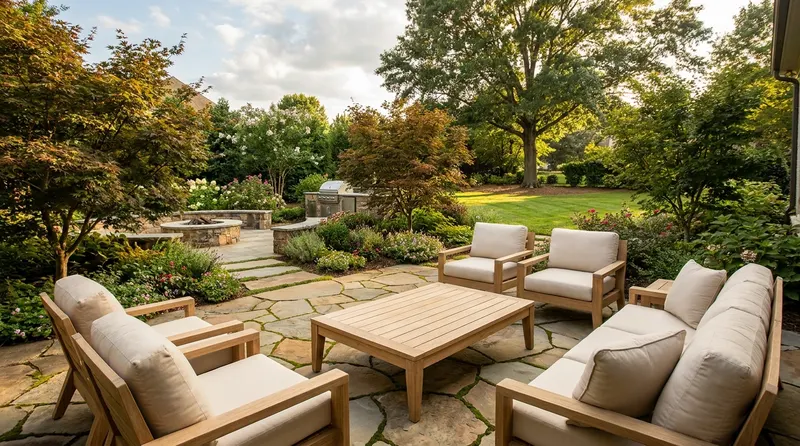
When we plan outdoor living for Charlotte-area homes, we treat the cooking zone the way we treat patios and plantings: as a place with a clear dream attached. University extension design guidance describes outdoor living spaces as places to gather, socialize, and enjoy the landscape with friends and family, not as isolated gadget corners.[7] Landscape educators also remind homeowners that outdoor rooms work best when they do not try to do everything at once. Start with an honest picture of what you truly plan to do outdoors, then size the room to that use.[6]
That is the heart of the walk-up grill station vs outdoor kitchen decision. A walk-up station celebrates the grill as the hero. A full suite celebrates the meal as a longer outdoor ritual: prep, cook, plate, serve, linger, and clean without bouncing indoors every few minutes. Neither path is a consolation prize. Both can feel premium when the hardscape, proportions, materials, and guest flow are intentional.
National industry snapshots show how far outdoor cooking can grow once people fall in love with it. HPBA's 2021 survey data on premium-grill recipients found that about 35 percent reported having an outdoor kitchen, nearly all of those kitchens included a grill, and about 73 percent of owners used the outdoor kitchen at least three times per week, with average outdoor-kitchen investment reported around $10,600 in that survey group.[2] A 2019 NKBA outdoor kitchen study aimed at more complete outdoor kitchens (defined with a grill, refrigerator, and additional components) found a typical spend near $13,000, with a quarter of homeowners building at $30,000 and above, and most spaces between about 100 and 400 square feet including seating in the meal-prep zone.[3] Those figures are historical survey snapshots, not a current 2026 shopping list for every Charlotte backyard. They are proof that both focused and full-scope cooking spaces have long been normal, desirable parts of outdoor living.
The walk-up grill station: pure cookout pleasure
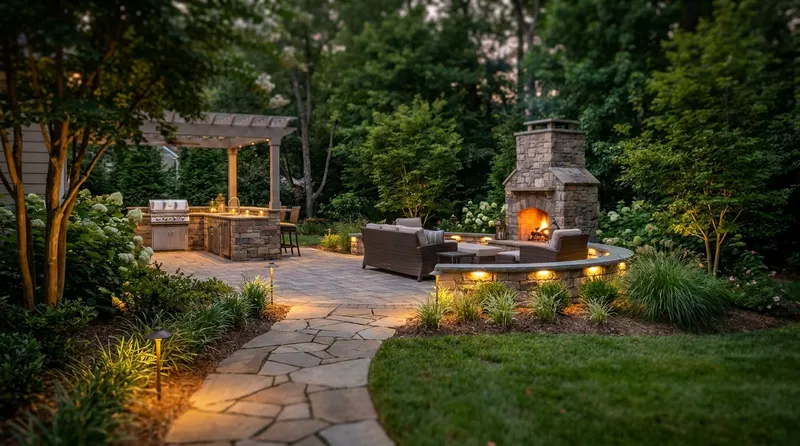
A walk-up grill station is the backyard equivalent of a well-designed coffee bar: compact, beautiful, and specialized. Built-in or freestanding grill, solid counter wings for tongs and trays, storage for tools, and enough hardscape for the cook to stand comfortably while guests hover with drinks. The mood is easy. Burgers, steaks, vegetables, and weekend seafood can shine without a full appliance wall.
This is a strong fit when your hosting style is relaxed and social rather than multi-course. Guests gather near the heat. The cook stays in the conversation. Sides may still come from the indoor kitchen, and that is fine. National outdoor-kitchen research notes that meal prep and cleanup often still involve the indoor kitchen and that an easy transition between the two kitchens is a real benefit.[3] A walk-up station leans into that hybrid rhythm on purpose. You get the smoke, sizzle, and outdoor theater of grilling without asking the yard to become a second full kitchen.
Design details that make a walk-up station feel finished rather than temporary:
- A stable, weather-ready base integrated with patio paving so the cooking moment belongs to the hardscape, not to a lonely cart on the lawn. Our patio work often sets this foundation first.
- Counter depth and landing space on at least one side of the grill for raw-to-cooked staging. Food-safety guidance stresses using separate plates and utensils for raw and cooked proteins so juices never return to the serving surface.[4]
- Nearby seating that faces the cook, not away from them. The walk-up station is half kitchen and half social magnet.
- Simple task light at the counter and path light for evening plate runs, so night cookouts stay comfortable.
- Material choices that match the rest of the yard: natural stone or other durable counters, masonry or quality cladding, and a finish language that ties to seating walls or the home exterior.
A walk-up station is also an excellent first chapter if you expect to grow later. Leave clear utility paths and a logical expansion line so a sink, under-counter refrigerator, or second cooking module can arrive when your entertaining style expands. Industry research on completed outdoor kitchens shows homeowners often rely on professional installers for at least part of the work and care deeply about layout, flow, shelter, and materials, not only appliances.[3] Getting the bones right early protects that future ambition.
Choose the walk-up path when your dream sounds like this: Friday evening steaks with neighbors, kids tossing a ball nearby, a simple salad from inside, and the whole night revolving around the grill’s glow. That is cooking ambition with a warm, unfussy center of gravity.
The full outdoor kitchen suite: multi-course hosting outdoors
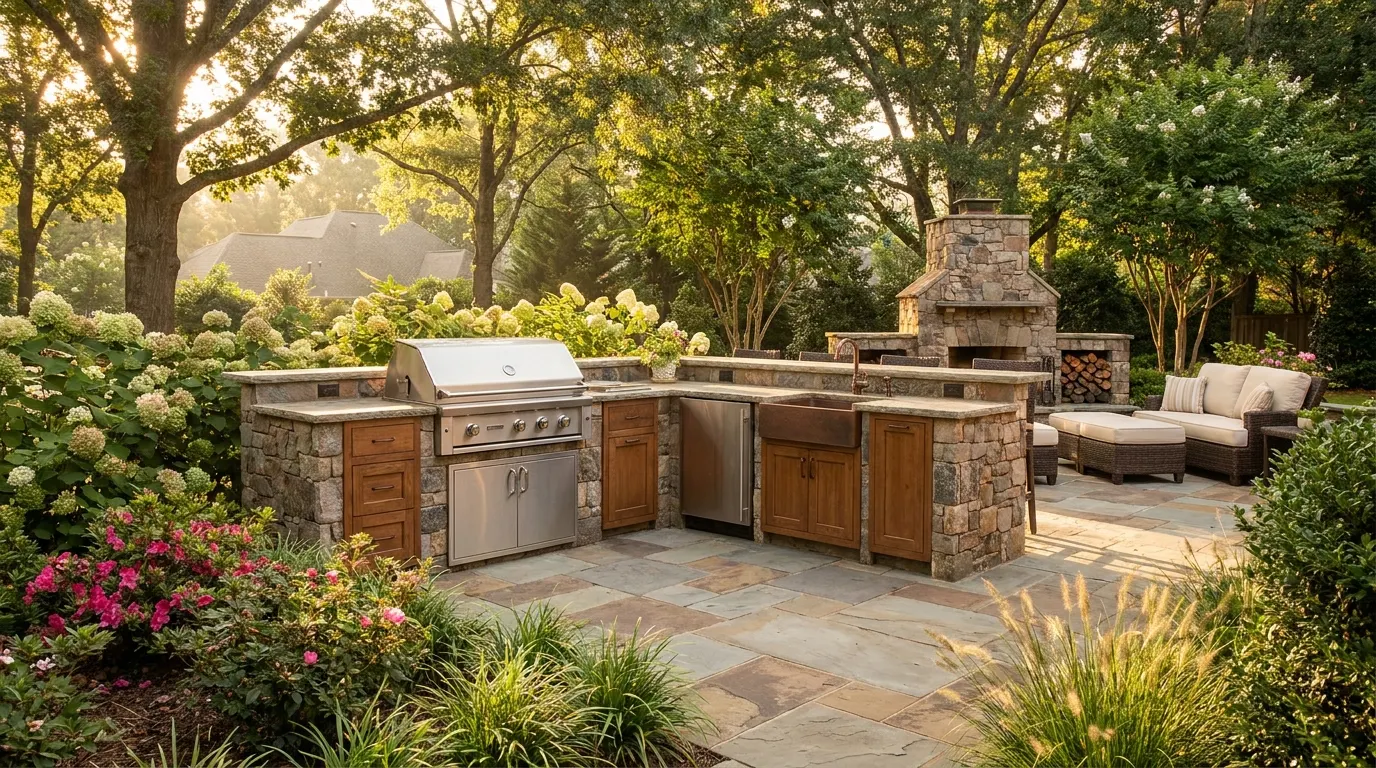
A full outdoor kitchen suite is a different dream. Here the yard becomes a destination for longer meals: appetizers, main courses, sides held warm, cold drinks within reach, and cleanup that does not interrupt the evening. Trade research describes key outdoor-kitchen components as a grill, refrigerator, sink, cabinets, countertop or prep surface, lighting, and related comfort features, with “family-friendly” and “casual” as leading look-and-feel goals for many homeowners.[3] Most owners in that profile use or plan to use the space at least a few times a week across three seasons.[3]
What “full suite” typically means in a residential backyard:
- Multiple work zones: hot cooking, cool prep, plating, and cleanup.
- Cold storage rated for outdoor use so proteins and sides stay at safe temperatures without constant trips indoors. Cold food should be held at 40°F or below, and perishable food should not linger in the danger zone between 40°F and 140°F for more than 2 hours, or 1 hour when outdoor temperatures exceed 90°F.[4]
- A sink for rinsing produce, filling pots, and handling tools and hands between tasks.
- Generous counters so several people can help without crowding the grill lid.
- Cabinets or weather-ready storage for tools, glassware, and non-food supplies, which is how many homeowners actually use outdoor cabinetry.[3]
- Optional secondary cooking (side burners, griddle, pizza oven) when your menu regularly needs more than one heat profile at once.
- Overhead structure or thoughtful screening when you want shade, weather cover, and a stronger sense of enclosure. Outdoor-room thinking values defined floors, vertical edges, and overhead planes so a space feels like a true room, not an open slab.[6]
Safe cooking still sits at the center of ambition. Public health guidance for outdoor grilling recommends cooking whole cuts of beef, pork, veal, and lamb to 145°F with a rest, ground meats to 160°F, and poultry to 165°F, and keeping cold items cold before they hit the fire.[5] A full suite makes those habits easier because cold storage, clean counters, and hot holding or serving space can live beside the grill instead of in three different rooms of the house.
Choose the full suite when your dream sounds like this: birthday dinners plated outdoors, holiday cookouts with more than one cook at work, weekend brunch with a griddle and coffee station, or regular multi-course evenings where the indoor kitchen stays mostly closed. Premium-grill research also notes Independence Day and Memorial Day as peak grilling holidays for mid-to-high-end grill owners, which is exactly the kind of calendar many full suites are built to host with flair.[2]
Matching the choice to how you host
The walk-up grill station vs outdoor kitchen question becomes simple when you describe a perfect Saturday from late afternoon through nightfall.
If the perfect Saturday is one main cook, a handful of guests, and lots of conversation at the fire or table, the walk-up station usually leads. Your ambition is excellence at the grill and a beautiful place to stand while you cook. The patio dining zone, landscape lighting, and maybe a fire feature complete the night. The cooking package stays focused so budget and footprint go into materials and guest comfort.
If the perfect Saturday is a menu with courses, cold sides that need holding, drinks that stay iced, and guests who circulate through the cooking zone for an hour or more, the full suite leads. Your ambition is hospitality that never feels improvised. Counter runs become serving lines. The refrigerator protects salads and proteins through a long Carolina afternoon. The sink keeps the work surface reset between tasks. The suite turns hosting into a smooth outdoor ritual.
Many Charlotte properties land in a smart middle ground we plan as phased suites:
- Phase one: walk-up grill station with excellent counters, storage, and utility stub-outs.
- Phase two: outdoor refrigeration and sink when you are cooking outside more often.
- Phase three: secondary cooking or bar seating when the yard becomes a weekly destination.
Phasing is not hesitation. It is design discipline. Extension guidance on outdoor rooms encourages defining uses clearly so each room serves its function well.[6] A focused phase-one station that hosts beautifully today is better than an oversized shell that never matches how your family gathers.
Also consider guest count and traffic. Industry outdoor-kitchen research found that outdoor kitchen use is most often for family meals or smaller get-togethers of about ten or fewer people, with counter or bar seating and conversational seating more common than freestanding formal dining inside the kitchen footprint.[3] That pattern favors clear cook zones and easy side conversation, whether the equipment package is lean or full.
Building the destination feel around either choice
Cooking equipment alone does not create destination energy. The hardscape, planting, and room edges do. Outdoor living specialists describe these spaces as places to gather and enjoy the landscape together.[7] We design the cooking package as one chapter in that larger story.
For a walk-up grill station, destination feel comes from:
- Paver or stone patio geometry that pulls people toward the grill without blocking the cook.
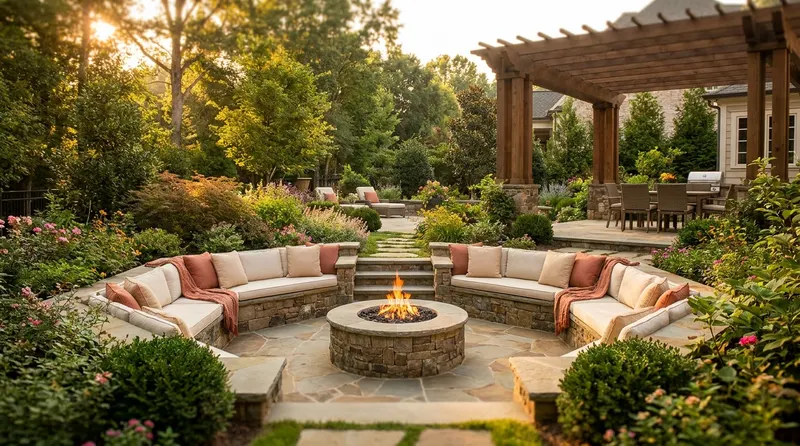
- A seating wall or bar-height ledge that turns the station into a social edge.
- Planting that frames the view and softens equipment mass.
- Lighting that makes the station glow as an evening landmark.
For a full outdoor kitchen suite, destination feel comes from:
- Defined floor planes that separate cooking, dining, and lounge zones while keeping circulation open.
- Counters that double as guest rails without putting people in the heat plume.
- Shelter and privacy that make the suite feel like a room you enter, not a wall of stainless steel you walk past.
- Material continuity with the home and patio so the suite looks designed, not bolted on.
In both cases, we plan for Carolina weather realities: summer heat that rewards shade and cold storage discipline, spring and fall evenings that reward heaters or fire features nearby, and storm seasons that reward durable counters, proper drainage, and appliances rated for outdoor exposure. Food-safety rules about time and temperature become easier to honor when cold and hot holding are designed into the room rather than left to a cooler on the ground.[4][5]
Practical takeaways
- Lead with hosting style: relaxed cookouts favor a walk-up grill station; multi-course outdoor dinners favor a full outdoor kitchen suite.
- Treat the decision as room design, not a shopping cart. Outdoor rooms work best when they serve a clear primary use.[6]
- A walk-up station can be complete and premium on its own when counters, hardscape, storage, and guest flow are well resolved.
- A full suite usually pairs the grill with refrigeration, sink, prep counters, storage, and lighting so the meal can stay outside longer.[3]
- Respect food safety in the design: keep cold foods at 40°F or below, limit time in the 40°F to 140°F danger zone, and cook proteins to recommended internal temperatures.[4][5]
- Expect hybrid habits. Many households still use the indoor kitchen for some prep and cleanup; easy indoor-outdoor transition matters.[3]
- Size for real guest patterns. Many outdoor kitchens serve family meals and smaller gatherings, with seating integrated into counters and conversation zones.[3]
- Plan utilities and expansion paths early if you may grow from a station into a suite.
- Use professional design and installation for layout, gas, water, electrical, drainage, and material durability. Trade research found most homeowners use professionals for at least part of outdoor kitchen installation.[3]
- Wrap either cooking package in patio, planting, and evening light so the yard feels like a destination, not a single appliance moment.[7]
How we can help
We design and build outdoor cooking spaces for Charlotte-area homes as part of complete outdoor living, from focused walk-up grill stations to full outdoor kitchen suites with bars, prep space, and guest flow that match how you host. If you are weighing a walk-up grill station vs outdoor kitchen suite for your patio, we will walk the property with you, talk through menus and gathering style, and shape a plan that feels warm, useful, and built for real Carolina evenings. Explore our outdoor kitchens and bars, see how cooking zones connect to patios and broader services, or request a price. We are ready to help you match cooking ambition to the backyard destination you want to come home to.
Citations
- Hearth, Patio & Barbecue Association - "2023 State of the Barbecue Industry" (2023)
- Hearth, Patio & Barbecue Association - "HPBA Insights for July's National Grilling Month" (2025-06-24)
- National Kitchen & Bath Association - "Outdoor Kitchen Profile Executive Summary" (2019-06)
- U.S. Food and Drug Administration - "Handling Food Safely While Eating Outdoors" (2024-03-05)
- Virginia Department of Health - "Grilling and Outdoor Food Safety" (2025-07-03)
- Penn State Extension - "Creating Outdoor Rooms" (2021-11-02)
- University of Florida IFAS Gardening Solutions - "Outdoor Living" (accessed 2026-08-09)
Planning your own outdoor living upgrade? Explore our outdoor living services in Charlotte.