Spa Terrace vs Full Poolscape: Choosing a Water-Centered Retreat for Smaller Charlotte Lots
Opening answer (BLUF)
For many Charlotte homeowners with a compact lot, a spa terrace delivers the water-centered retreat you want without asking the entire yard to become a swim venue. A full poolscape is the better dream when you want long swims, larger gatherings in the water, and a landscape built around a permanent pool program. Both paths can feel luxurious; the smart choice is the one that matches how you will actually live outside, the footprint your lot can host after setbacks and circulation, and the maintenance rhythm you welcome for years. Safety and permitting apply to pools and spas alike in North Carolina, so design and lifestyle should lead, with code as a nonnegotiable frame rather than an afterthought.[1][2][5]
What a spa terrace really is
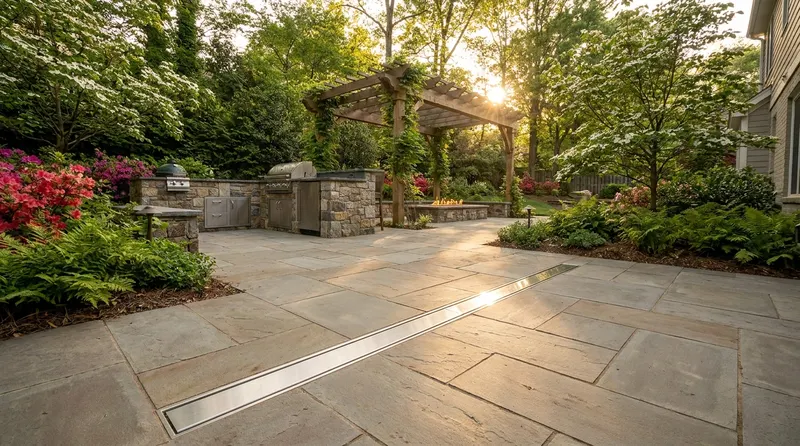
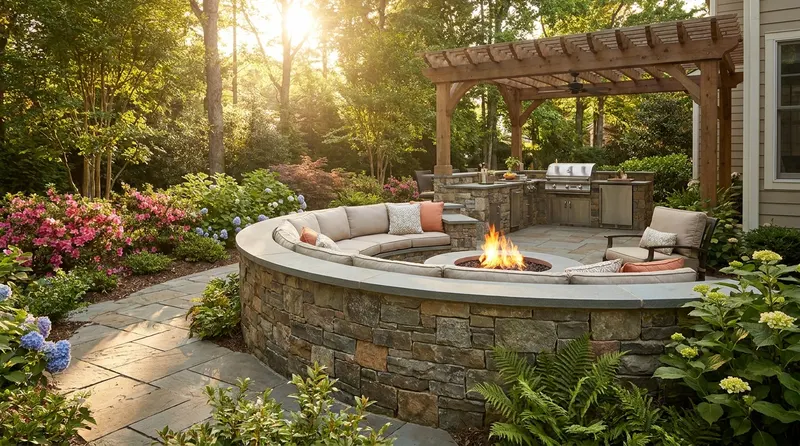
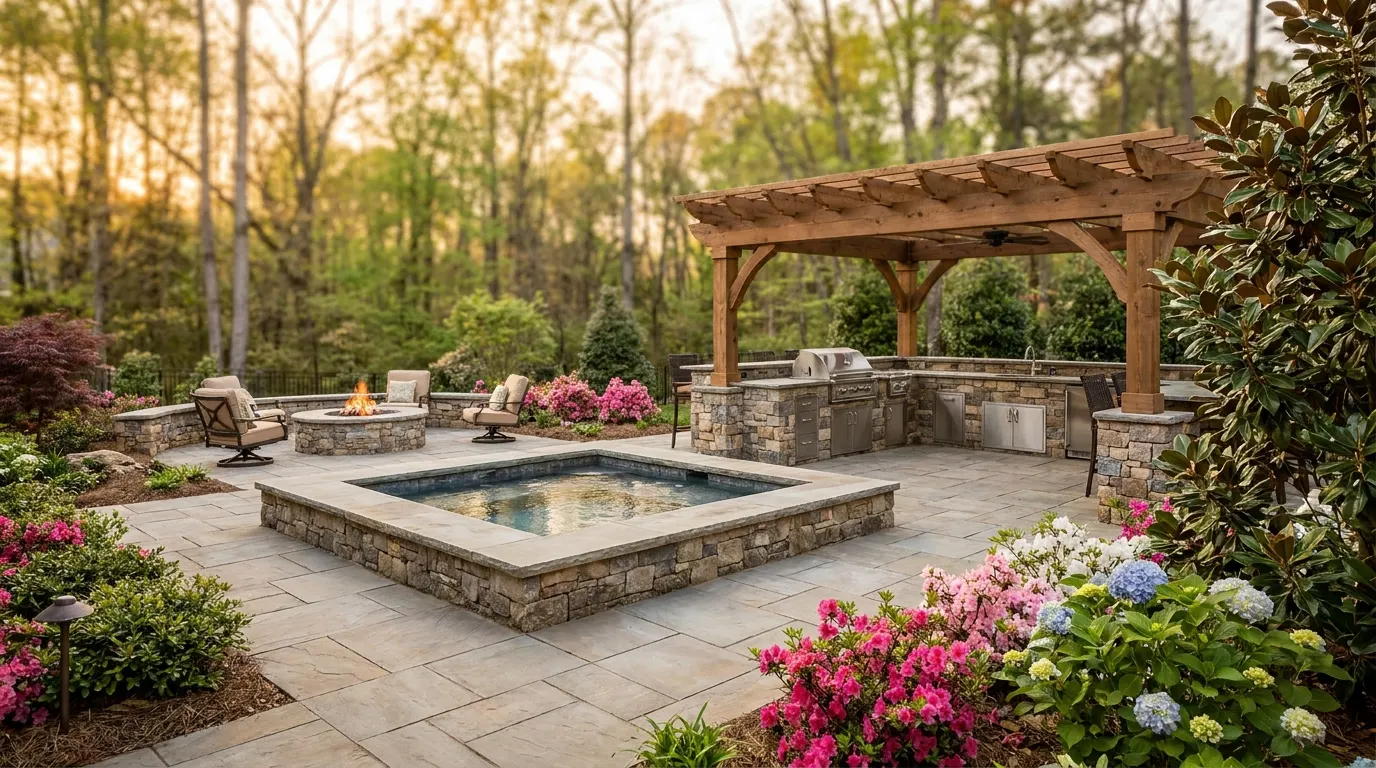
A spa terrace is more than a freestanding hot tub parked on a corner of the patio. It is a water-forward outdoor room: spa or compact spa-plus-plunge basin set into hardscape, framed by seating, planting, and often a subtle water feature so the experience feels designed rather than added. On a smaller Charlotte backyard, that composition becomes the centerpiece. You step out of the house into a lounge-and-soak setting that can run cool mornings, after-work wind-downs, and winter nights under a cover or heater plan, without requiring a full-length swimming lane.
The luxury is concentration. Instead of spreading the budget across a large water body and the deck needed to wrap it, you invest in finish quality, integrated seating walls, thoughtful grade changes, and a spa that is built into the architecture of the terrace. That is why spa terraces pair so well with South Charlotte, NoDa, Plaza Midwood, and other neighborhoods where rear yards are precious and every square foot has a job.
What a full poolscape asks of the yard
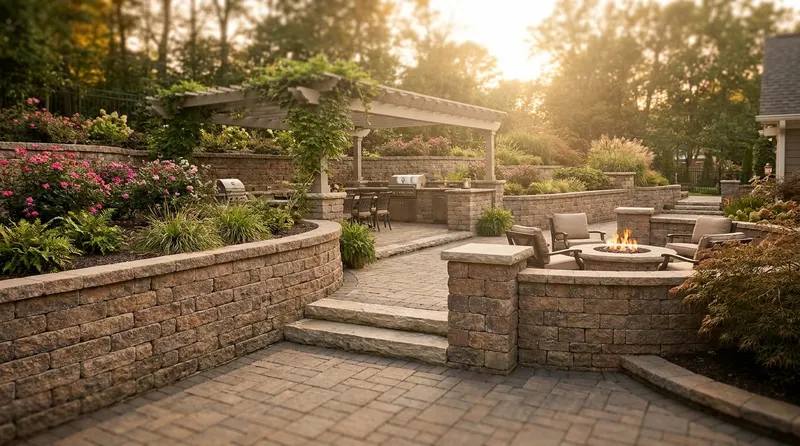
A full poolscape is a different program. It is not only water for swimming. It is decking for towels and chairs, clear paths for furniture, equipment placement, fencing or barriers, and often a secondary lounge so the pool does not consume every social moment. Industry design conversations and homeowner demand surveys have long shown that outdoor living is about flexible use, seating, and multi-purpose hardscape as much as about a single amenity.[3] When the pool becomes the star, those supporting rooms still need real space.
On a generous lot, that program can feel effortless: lap length, shallow shelf for kids or loungers, and still enough lawn or planting to soften the view. On a tighter Charlotte lot, the same dream can crowd circulation, leave little room for dining, or force hard choices about shade and privacy. A poolscape is a wonderful answer when swimming is a primary ritual. It is a frustrated answer when the lot geometry fights the pool shape before design even begins.
Lot size, setbacks, and the real usable footprint
Charlotte and Mecklenburg County treat residential pool construction as a permitted project. Mecklenburg County Public Health requires approval to construct a residential swimming pool, and building permits must also be obtained through the Mecklenburg County Land Use and Environmental Services Agency (LUESA).[4] That process is not a reason to abandon the dream. It is a reason to measure twice: property lines, easements, HOA envelopes, and the clearances your specific zoning and building review will require.
North Carolina barrier rules for outdoor pools, hot tubs, and spas reinforce that both spa terraces and full poolscapes sit inside a safety envelope. Guidance used statewide, and spelled out for installers in jurisdictions such as Raleigh, calls for a barrier at least 48 inches high above grade on the side facing away from the water, with limited openings and self-closing, self-latching access where gates are used.[2] Federal consumer-safety guidance likewise treats spas and hot tubs within the same residential barrier conversation as pools.[5] Those requirements protect people. They also consume linear feet of yard, which is exactly why a spa terrace often fits small lots more kindly: the water surface is smaller, the barrier can sometimes integrate with site walls or equipment screening more gracefully, and more of the remaining patio stays available for living, not only for circling the pool.
Before you fall in love with a magazine-length rectangle, map the usable yard after barriers, equipment pads, and walking space. That sketch, more than a square-footage number alone, tells you whether the full poolscape still leaves room for the rest of the outdoor life you want.
Lifestyle fit: soak and socialize, or swim and host
Choose by the week you actually live, not the week you imagine once a year.
Spa terrace tends to win when:
- Your favorite outdoor moments are conversation, quiet soak, and evening hospitality for a few close friends.
- You want water most of the year, not only peak summer swim weather.
- The yard still needs space for dining, kids’ play, pets, or garden beds after water is placed.
- You prefer a compact water volume and a maintenance plan sized to a spa rather than a full pool body.
Full poolscape tends to win when:
- Regular swimming, floating with a group, or teaching kids to swim is central to the home’s outdoor identity.
- The lot can host pool plus deck plus another social zone without feeling crowded.
- You are prepared for the full construction sequence, longer build, and ongoing water chemistry of a larger body of water.
- The visual of a true pool is part of the home’s pride and resale story in your specific neighborhood.
Neither choice is “more premium.” A finely detailed spa terrace on a tight lot can outshine a pool that leaves no room to sit. A well-proportioned poolscape on a lot that can carry it is hard to beat for pure summer joy. The decision is fit, not status.
Water, energy, and the quieter costs of scale
Outdoor water use is a meaningful share of household demand nationwide. EPA’s WaterSense program notes that residential outdoor water use across the United States accounts for nearly 8 billion gallons each day, mainly for landscape irrigation, and that the average U.S. household uses more water outdoors than for showering and washing clothes combined.[6] Pools and spas add their own water story through evaporation, splash-out, cleaning, and leaks. EPA’s pool water-efficiency guidance is frank: pools can consume water in those ways, and many of the same efficiency practices also apply to spas.[7]
One of the strongest efficiency tools for large water surfaces is covering. WaterSense reports that using a pool cover can prevent up to 95 percent of pool water evaporation, with additional benefits for heat retention, cleaning load, and a measure of safety when covers are used appropriately.[7] A spa terrace, with far less surface area, typically means less evaporation volume even before covers enter the conversation. A full poolscape can still be managed responsibly with covers, smart equipment, and good habits. The point is not guilt. It is honesty: larger free water surface equals a larger ongoing water and energy relationship. If that relationship matches how often you will swim, it is money well spent. If most of your joy is soaking and lounging, a spa terrace often spends those same dollars on finishes and daily use instead of unused gallons.
Design moves that make either path feel intentional
Whether you choose spa terrace or full poolscape, the best Charlotte projects read as one outdoor living composition, not a water vessel dropped on leftover lawn.
For a spa terrace charlotte backyard:
- Set the spa into the terrace elevation so seats, coping, and walkways feel continuous.
- Plan for privacy with planting, screens, or grade rather than hoping the neighbors will ignore the glow of evening water.
- Add a companion water feature (scupper, bubbler, or small wall sheet) so the sound of water greets you even when the spa is covered. Our water features work pairs naturally with spa terraces for that layered effect.
- Keep clear landing space for stepping in and out with a towel in hand. Luxury fails when every move is a shuffle.
For a full poolscape:
- Leave a real secondary room: dining, fire lounge, or lawn strip so the pool is not the only place to be.
- Align the long axis with the house and sun path so glare and shade work for afternoon use.
- Treat equipment as a design problem: screened, accessible, and quiet enough that the patio still feels like a room.
- Budget for decking depth, not only water length. Thin decks make beautiful pools hard to use.
Across both options, flexible outdoor rooms remain highly valued. An American Society of Landscape Architects survey of landscape architects ranked flexible-use outdoor space among the strongest consumer demand signals for residential landscapes, with seating, dining, and multi-purpose hardscape features ranking ahead of many single-purpose amenities.[3] That research backs a simple field truth we see on Charlotte lots: water should support how people gather, not erase every other gathering place.
Safety as design, not a late add-on
Water-centered living deserves beauty and clear safety thinking from day one. The American Red Cross reports that drowning is the number one cause of death for children ages 1 to 4 in the United States, and that for children younger than 5, 87 percent of drowning fatalities happen in home pools or hot tubs.[1] Proper barriers that keep young children from reaching water without a caregiver’s awareness are a core prevention layer, and federal consumer-safety guidance treats residential pools, spas, and hot tubs together in barrier planning.[5]
CPSC barrier guidelines emphasize that barriers never replace adult supervision.[5] North Carolina’s 48-inch barrier framework for outdoor pools, hot tubs, and spas gives local projects a concrete design constraint you can plan into walls, gates, and grades instead of fighting after the fact.[2] On a spa terrace, that often means integrating the barrier with site walls, latching gates from house doors, or approved spa covers where code allows. On a full poolscape, it usually means a deliberate isolation plan so the house does not become the weak fourth side. Either way, the safest projects look intentional because safety was drawn into the plan, not bolted on.
Budget and timeline: different shapes of investment
Homeowners sometimes compare spa terrace and poolscape only by the spa unit price versus a pool shell quote. That comparison understates both projects. A spa terrace budget should include structural pad or recessed construction, electrical capacity, hardscape, drainage, and the landscape frame that makes it a terrace. A full poolscape budget should include excavation realities on Piedmont clay, decking, barriers, equipment, and the finishes that keep the pool from looking unfinished two summers later.
As a rule of thumb for decision-making (not a fixed bid):
- Spa terrace projects often concentrate cost in craftsmanship and electrical readiness, with a shorter path from design to first soak when site access is good.
- Full poolscapes concentrate cost in construction duration, earthwork, and the large surrounding hardscape package.
We would rather help you size the dream to the lot than stretch a pool into a yard that will never forgive it, or undersell a spa terrace when your family truly wants to swim every evening.
A simple decision path for Charlotte homeowners
- Name the primary ritual. Soak and conversation, or swim and float? Write it down before looking at catalogs.
- Measure usable yard. Property lines, HOA rules, tree protection, and rough barrier envelopes matter more than wishful sketches.
- Count supporting rooms. After water is placed, do you still have dining and a place to sit that is not pool coping?
- Be honest about calendar use. How many months and how many evenings will water be part of your real week?
- Plan for permits early. Residential pools in Mecklenburg County need both public health approval and LUESA building permits; spas and related work may still involve electrical, structural, and barrier compliance.[4][2]
- Design one composition. Water, hardscape, planting, and safety should arrive as a single story.
If those six steps point to concentrated luxury and year-round soak culture, the spa terrace is usually the hero. If they point to regular swimming and a lot that still has room to breathe, lean into the full poolscape with confidence.
Practical takeaways
- A spa terrace is a designed outdoor room built around soak and social life; a full poolscape is a swim-first program with a larger support deck and barrier envelope.
- On smaller Charlotte lots, usable footprint after setbacks, equipment, and barriers often favors the spa terrace without sacrificing a high-end feel.
- Match the water type to weekly habits, not to a one-weekend fantasy.
- Larger free water surface means a larger ongoing water and energy relationship; covers can prevent up to 95 percent of pool evaporation when used well.[7]
- Outdoor living demand still favors flexible rooms and seating, so leave space for life beyond the water’s edge.[3]
- Plan barriers and Mecklenburg permitting into the first design pass; both pools and spas sit inside safety frameworks used across North Carolina.[1][2][4][5]
How we can help
At Mr. Outdoor Living, we design outdoor living spaces for Charlotte-area homes with the lot and the lifestyle in the same conversation. Whether you are leaning toward a spa terrace charlotte backyard or a full poolscape framed by patio and planting, we can walk the site, map real clearances, and sketch options that keep water beautiful without crowding out the rest of outdoor life. Explore our water features work, browse the gallery, or contact us at (704) 806-7260 to schedule a design conversation.
Citations
- American Red Cross - "Drowning Prevention & Facts" (accessed 2026)
- City of Raleigh - "ABCs of Installing a Pool or Spa" (updated 2026-07-14)
- American Society of Landscape Architects - "ASLA Survey: Demand High for Residential Landscapes with Sustainability and Active Living Elements" (2018)
- Mecklenburg County Public Health - Environmental Health - "Pools" (accessed 2026)
- U.S. Consumer Product Safety Commission - "Safety Barrier Guidelines for Residential Pools" (PDF)
- U.S. Environmental Protection Agency - WaterSense - "Outdoors" (updated 2026)
- U.S. Environmental Protection Agency - WaterSense - "Pool Water Efficiency" (updated 2026)
Planning your own outdoor living upgrade? Explore our outdoor living services in Charlotte.