Pondless Waterfalls vs Reflecting Fountains: Choosing a Water Feature for Your Charlotte Backyard
Opening answer (BLUF)
Choosing a Charlotte backyard water feature is less about “water in general” and more about the feeling you want every evening: movement and music from a pondless waterfall, or calm mirror light from a reflecting fountain. North Carolina Cooperative Extension notes that water can cool the air near seating, add movement and texture, and bring a relaxing sound to the yard, including pondless designs that cascade into a concealed reservoir so you still enjoy running water without a full open pond.[1] Both styles work beautifully in Charlotte outdoor rooms when the feature matches your home’s architecture, your preferred sound level, and how you actually use the patio after dark.
Two design personalities, one outdoor room
Think of these options as two different personalities sitting next to your lounge chairs.
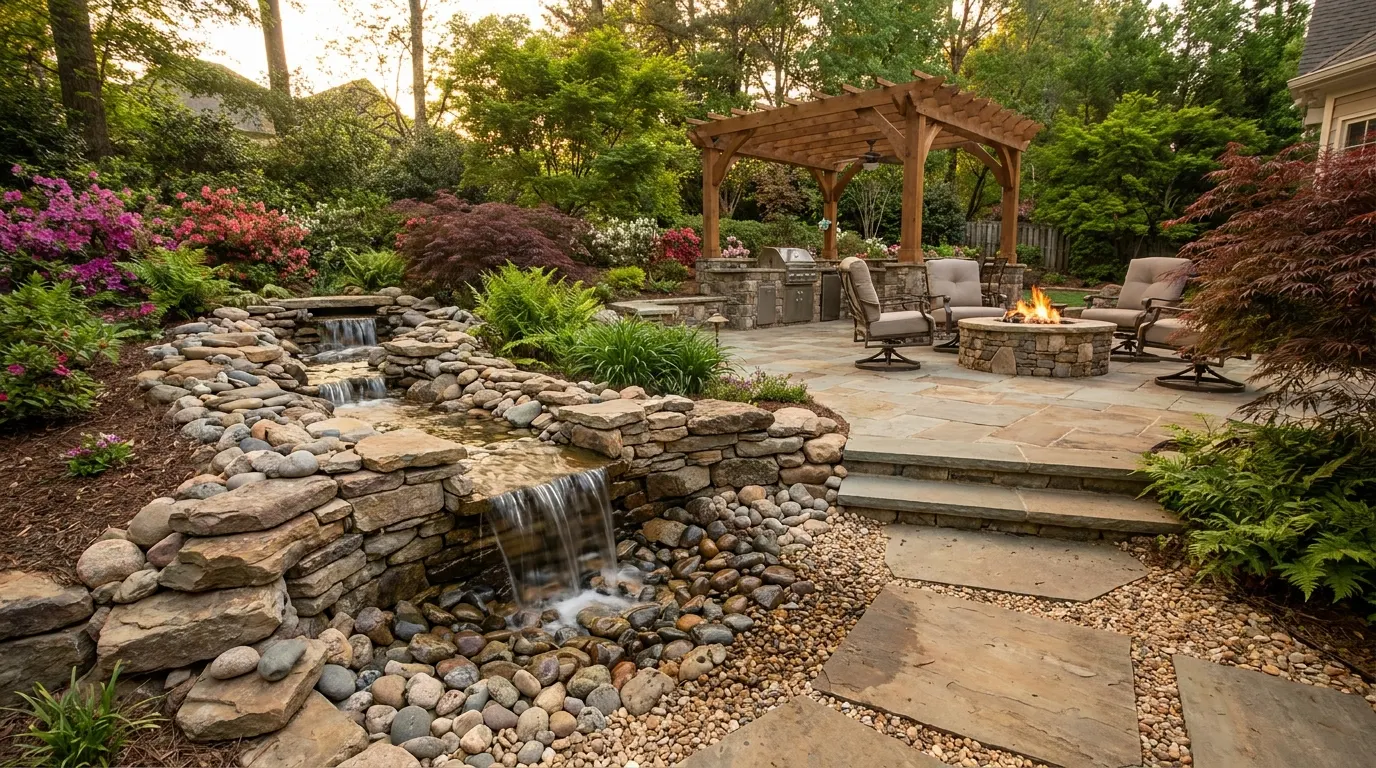
A pondless waterfall is the storyteller. Water moves over stone, drops in layers, and disappears into a hidden reservoir under rock or gravel. Extension educators describe pondless features as waterfalls or streambeds that cascade into a concealed basin, so you get the relaxing sound of running water and even help soften street noise, without a large open water surface in the middle of the lawn.[1] University of Tennessee Extension likewise points homeowners who want moving water without the upkeep of a traditional pond, fish, and aquatic plant system toward a pondless water feature as a clean design choice.[2]
A reflecting fountain (or a still reflecting basin with a quiet fountain edge) is the calm companion. UF/IFAS Gardening Solutions notes that fountain sound can be very soothing, that fountains add a cool feeling to the garden, and that pumps recirculate water so the same water works hard for you instead of running away.[3] In residential design, “reflecting” usually means a shallow, formal or semi-formal surface that catches sky, tree canopy, and evening light, often with a gentle spill, sheet fall, or soft bubble rather than a roaring cascade.
Neither choice is a consolation prize. They simply deliver different payoffs: motion and melody versus stillness and shine. The best Charlotte yards pick the payoff that matches how the family actually lives outdoors.
What a pondless waterfall really is (and why homeowners love the look)
A pondless waterfall is a recirculating system. Water is stored in an underground or under-rock reservoir, a pump lifts it to the top of a stone face or streambed, and the water returns to the reservoir. From the patio, you see rock, plantings, and living water. You do not see a big open pond taking up the lawn.
K-State Research and Extension’s Master Gardener guidance on water gardens without a pond explains several homeowner-friendly benefits of smaller and pondless-style features: they bring sound and movement, they adapt to small spaces, and they ease some of the higher-maintenance expectations that come with full ponds.[4] That “small space adaptability” matters in Charlotte, where many lots balance patio, turf, and planting beds rather than offering a broad, empty acre for a large pond.
Design-wise, pondless waterfalls shine when you want:
- A natural edge next to woodland plantings, boulder seating, or a privacy screen
- A destination moment at the far end of a patio walk, so guests are drawn into the garden
- Layered sound that can range from a soft trickle to a fuller cascade, depending on drop height and flow
K-State notes that moving water can produce anything from a soft trickle to a louder roar, and that flow rate, fall height, and the surface the water hits all change the soundtrack. Nearby structures can also reflect and enhance sound. A large volume can feel invigorating, while a gentler flow is often more peaceful beside a sitting area.[4]
That last point is gold for outdoor living design. If your primary dream is conversation on the patio, we usually dial the cascade so it supports the room rather than competing with it. If your dream is a private retreat under a tree canopy, we may lean into a fuller sheet of sound that wraps the seating.
What a reflecting fountain really is (and the quiet payoff)
A reflecting fountain in a residential yard often looks more architectural than a rocky streambed. It may be a formal rectangle of dark, still water with a thin spillway, a circular basin with a soft central jet, a modern trough with a continuous sheet fall, or a sculptural vessel that returns water to a shallow, mirror-like surface.
UF/IFAS emphasizes that fountains come in many shapes and sizes, that they recirculate water with electric or solar pumps, and that any gardener can add water interest across a range of spaces and budgets. Before you install, they advise checking the view so the fountain is easy to see from both outdoors and indoors, and being thoughtful about heavy debris drop from overhead trees.[3]
The reflecting side of the idea is about light as much as water. Still or nearly still surfaces pick up Charlotte’s big summer skies, the glow of string lights or path lights after sunset, and the silhouette of a favorite tree. When the surface is calm, the yard gains a second “sky” at ground level. When a gentle spill or bubble keeps the surface alive, you still get a light soundscape without the full drama of a multi-drop waterfall.
Reflecting fountains tend to suit:
- Clean patio geometry (straight walls, modern pavers, formal plant beds)
- Entry courts and courtyard rooms where a centered basin feels intentional
- Evening entertaining, when light on water becomes part of the hospitality
N.C. Cooperative Extension also recommends locating water features near outdoor sitting areas so you can enjoy reflections of light and the cooling effect of evaporation while you rest in a shaded pocket of the yard.[1] That is design language for “put the pretty water where you actually sit,” not somewhere only the mower visits.
Sound: the design decision most people feel first
If you close your eyes on the patio, which soundtrack do you want?
NC State Extension’s Plant Toolbox notes that even small water features can have a large impact: moving water is relaxing, can mask objectionable environmental noise such as automobile traffic, and can serve as a resource for wildlife.[5] That dual gift (comfort for people, interest for birds) is one reason a well-placed water feature becomes the emotional center of an outdoor room.
Pondless waterfalls usually win when you want presence. Multiple drops, rock ledges, and a longer stream path create a layered, outdoor “music” that can make a patio feel more private, especially if the lot sits near a busy street. Extension writing from North Carolina explicitly links running water to muffling busy-street sound while still delivering that relaxing cascade experience.[1]
Reflecting fountains usually win when you want soft presence. A thin spill or quiet bubble can be enough to read as water, enough to mask a little ambient noise, and still leave room for conversation, music, or a quiet morning coffee. UF/IFAS’s simple line is the right north star here: fountain sound can be very soothing and enjoyable, and the cool feeling of water is part of the garden experience.[3]
Neither is “more luxury.” Luxury is getting the sound right for your evenings.
Layout fit for Charlotte backyards
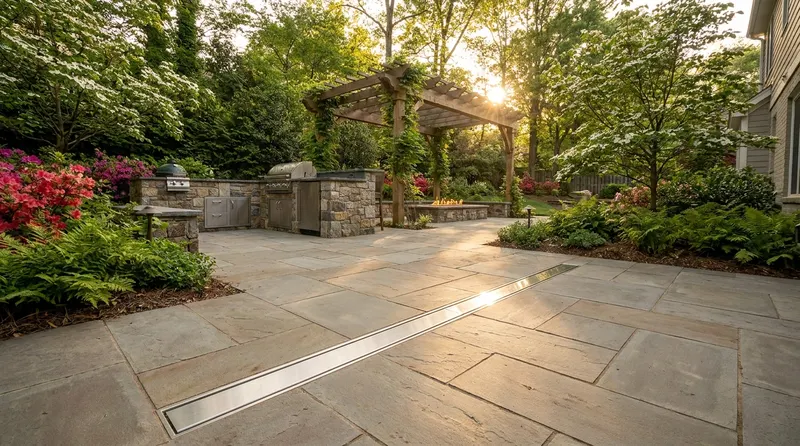
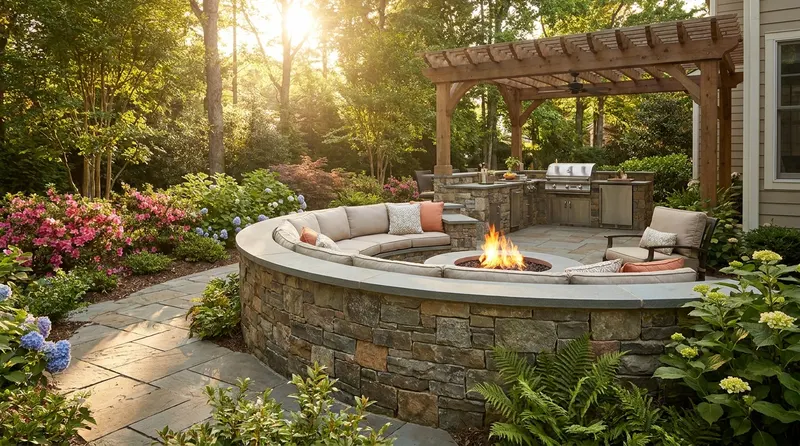
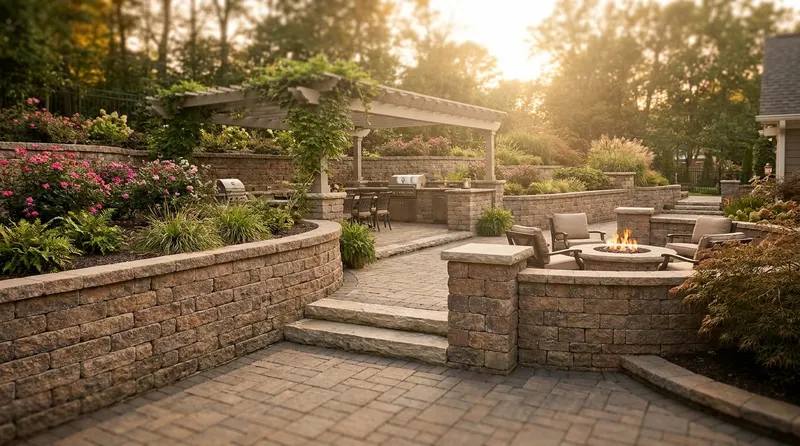
Charlotte outdoor living spaces often mix hardscape and green space: a patio, a seating wall, plant beds, maybe a grilling zone, maybe a path to a quiet corner. Water should plug into that plan the way furniture does, with a clear role.
Pondless waterfall layout strengths
- Works on gentle grades and downhill edges, where Extension notes a slope can become an ideal home for a stream or waterfall instead of fighting the land.[1]
- Pairs well with natural stone, boulder accents, and layered plantings that soften the hard lines of walls and beds.[1]
- Creates a destination at the garden edge, so the patio feels like the living room and the waterfall feels like the window view.
Reflecting fountain layout strengths
- Sits cleanly inside a courtyard or patio geometry without needing a long stream run.
- Anchors a seating circle or dining edge as a true focal point or complementary art piece, which Extension lists among the roles water can play in a landscape.[1]
- Frames architecture: a formal basin can echo house lines, while a vessel fountain can act as sculpture.
K-State’s planning checklist is a practical design filter: match the feature to the style of the home (formal, informal, cottage, modern), decide whether you want a patio accent or a garden destination, and check the year-round view from inside the house if you want daily enjoyment beyond peak patio season.[4] That indoor-to-outdoor view is especially rewarding in Charlotte winters, when you still want a beautiful garden picture from the kitchen or sunroom.
Evening ambiance and the way water holds light
Daylight shows the craftsmanship. Evening shows the magic.
A pondless waterfall after dark becomes a ribbon of motion. Low landscape lighting on the rock face, a soft wash on nearby plantings, and the glint of moving water make the feature feel alive without turning the yard into a stage set. Guests hear the water first, then follow it with their eyes.
A reflecting fountain after dark becomes a pool of sky and lamp light. Even a shallow surface can hold the glow of path lights, the silhouette of a Japanese maple, or the warm edge of a seating wall. If the design includes a gentle spill, that edge of motion reads like jewelry on the mirror.
UF/IFAS’s reminder to plan the view from both outdoors and indoors is especially useful for evening living: the fountain that looks good from the sofa after dinner is the one you will love for years.[3]
Care feel (without making the decision about chores)
Homeowners often ask which option “feels lighter” to live with. The honest design answer is that both are recirculating features with pumps, not free-running streams. The day-to-day feel differs mainly because of how much open water and how much ecosystem complexity you invite.
University of Tennessee Extension frames pondless features as the path for people who want the pleasure of moving water without taking on pond, fish, and plant maintenance as a lifestyle.[2] K-State’s pondless guidance similarly notes that smaller water features can reduce the sense of high-maintenance commitment many people associate with full ponds, while still delivering sound and movement.[4] Reflecting fountains, especially formal basins, reward clear water and a clean edge because the mirror is the point; that is a polish-and-enjoy rhythm more than a “mini nature preserve” rhythm.
Neither story is about fear. Both stories are about choosing the kind of enjoyment you want to own: a living rock stream that sings, or a bright basin that stills the room.
How landscape architects talk about water’s bigger role
At a professional design level, the American Society of Landscape Architects has highlighted natural and regenerative water features as ways to bring the rejuvenating, life-affirming qualities of water into built sites while thinking carefully about sustainability, treatment approach, and long-term stewardship.[6] Residential pondless waterfalls and reflecting fountains are usually simpler than large civic projects, yet they share the same core idea: water is not just decoration. It is an experience system. When we design for recirculation, thoughtful placement, and materials that suit your home, we are borrowing the same seriousness landscape architects bring to public work, scaled to a Charlotte patio.
A simple decision guide for Charlotte homeowners
Use this as a conversation starter with your designer (or with us on a site visit).
Lean pondless waterfall if you want:
- Natural stone character and a garden destination beyond the hardscape
- A richer outdoor soundtrack and a stronger sense of privacy through sound
- A feature that can ride a gentle grade or wooded edge
- The feeling of a woodland stream without committing to a full pond lifestyle
Lean reflecting fountain if you want:
- Architectural calm and a clean patio focal point
- Soft sound and strong evening reflections
- A feature that fits tight courtyard geometry
- A design that reads as sculpture and light as much as “nature channel”
Either can be right if you want:
- A daily moment of rest after work
- A place guests remember
- A Charlotte backyard water feature that fits the outdoor room instead of fighting it
Many of our favorite projects also combine water with plantings, seating walls, and thoughtful lighting so the feature feels inseparable from the patio, not like an add-on. N.C. Cooperative Extension’s advice to soften hard landscape lines with water and plants is a classic reason these projects feel finished.[1]
Practical takeaways
- Decide sound first: fuller cascade (pondless) versus soft spill or quiet bubble (reflecting fountain).[3][4]
- Place water where you sit and where you look from the house, not only where leftover lawn space exists.[1][3][4]
- Match style to architecture: natural rock stream for informal and woodland edges; formal basin or sculptural vessel for clean modern or classic lines.[4]
- Use grade as a gift when you have one: a gentle slope can become a stream or waterfall moment instead of a flat filler bed.[1]
- Remember the dual gift of moving water: relaxation for people and interest for wildlife, even in smaller features.[5]
- Treat recirculation and craftsmanship as part of the beauty: the system should support the experience you want every evening, not just look good on install day.[3][6]
- Choose the payoff, not a generic “water feature” label. Motion and melody, or stillness and shine.
How we can help
At Mr. Outdoor Living, we design and build outdoor living spaces across the Charlotte area, including custom water features that range from cascading stone falls to formal spillways and bubbling rock accents. If you are choosing between a pondless waterfall and a reflecting fountain, we will walk the site with you, listen for how you want the patio to feel at dusk, and shape a feature that fits your layout, your architecture, and your evenings. Contact us for a price or call (704) 806-7260 to start the conversation.
Citations
- N.C. Cooperative Extension, Lee County - "Water Features in the Landscape" (2022)
- University of Tennessee Extension - "Twelve Common Landscape Mistakes (W175)" (2023)
- UF/IFAS Gardening Solutions - "Fountains" (accessed 2026)
- K-State Research and Extension, Johnson County Master Gardeners - "Water Gardens without a Pond" (2022)
- NC State Extension Gardener Plant Toolbox - "Small Water Features" (accessed 2026)
- American Society of Landscape Architects (The Field) - "Natural Water Features" (2015)
Planning your own outdoor living upgrade? Explore our outdoor living services in Charlotte.