Reclaim Your Summer Evenings: Mosquito Control Landscaping for Charlotte Backyards

You invested in a beautiful backyard, then the mosquitoes moved in and chased you inside on the exact summer evenings you built the space to enjoy. Here is the honest starting point most guides skip: mosquito control landscaping is real and it works, but not the way the internet usually promises. Ringing your patio with "mosquito repellent plants" will not do it on its own. Smart design does move the needle, and it does so through grading, drainage, water features, planting, and layout rather than a chemical fog. That is the kind of change a design-build outdoor living company can make to your Charlotte yard, so you can reclaim your summer evenings.
It helps to know your opponent. In North Carolina the backyard biter is almost always the Asian tiger mosquito (Aedes albopictus), a daytime feeder that breeds in small containers of standing water and flies only about 100 to 300 yards. In plain terms, the mosquitoes biting on your patio very likely hatched right on or next to your own property. That is the opportunity, because your yard is exactly where thoughtful design gives you the most control.
First, the honest part: why mosquito repellent plants alone fall short
Walk any garden center in June and you will find tables of citronella, lavender, marigolds, and "mosquito plants." They are lovely, but they are not a mosquito plan on their own. NC State Extension, our own state's authority, puts it plainly: claims that plants placed around a porch or deck will keep mosquitoes away are "not supported by any scientifically-based test results." University of Florida experts call passive repellent plants "more myth than magic."
The reason is chemistry. Citronella, mint, basil, and lavender do contain oils that can deter mosquitoes, but the oils have to be extracted, concentrated, and applied to do much of anything. A research review of 62 studies of plant essential oils found that none tested landscape plantings for reducing mosquitoes, and even the oils that work on skin fade fast: rosemary oil lasted about 15 minutes and lemongrass oil about 40 minutes. Even catnip, the plant with the strongest lab evidence, works through its distilled oil, nepetalactone, rather than the growing shrub. The takeaway is not "skip the plants." It is "let plants be one pleasant layer, chosen for beauty and fragrance, while design does the real work."
The design levers that make mosquito control landscaping work
Because Charlotte's backyard mosquitoes breed close to home, four design levers do most of the work. They are listed in order of how much evidence supports them. This is design, not chemical fogging, and it is the difference between a one-time spray and a yard that stays far less inviting to mosquitoes season after season.
Lever 1: Design out standing water (the big one)
Every mosquito starts life in water. The egg, larva, and pupa stages all develop in standing water, and the U.S. EPA notes the cycle can run from about 4 days to a month, typically around two weeks. A female needs surprisingly little to start: Collier Mosquito Control District notes that a water source as small as a bottle cap will do. The most productive breeding spots are the ones homeowners overlook. A residential survey found tree holes positive for larvae 85.5 percent of the time and plant and pot saucers 68.8 percent, both well ahead of birdbaths.
So the highest-leverage move is removing the stagnant, puddled water that collects around a yard: plant saucers, clogged gutters and downspouts, tarps and low spots that hold a puddle after a storm, and neglected birdbaths. North Carolina's health department calls the routine "Tip and Toss," meaning empty standing water at least once a week from flowerpots, gutters, buckets, and pool covers. This is where grading and drainage earn their keep: correcting low spots and carrying roof water away with working gutters and a proper drainage plan removes the puddles before they ever form, for a well drained, enjoyable yard.
How fast does standing water breed mosquitoes in Charlotte?
To make "empty it weekly" concrete for our climate, we combined NOAA's 1991 to 2020 climate normals for Charlotte with published laboratory studies of how fast the Asian tiger mosquito develops (Kamimura 2002 and Delatte 2009), then computed how many days of undisturbed standing water it takes to produce biting adults each month. This is a model built from public data, not a count of real mosquitoes in local yards, and the exact timing depends on how warm the water gets (a sunny container runs faster than deep shade) and on the particular year. The pattern is clear: the hotter the month, the faster you have to empty standing water.
| Month | Average temperature | Modeled breeding window | Empty standing water at least |
|---|---|---|---|
| April | 61°F (16°C) | about 11 to 19 days | about weekly |
| May | 69°F (21°C) | about 9 to 13 days | about weekly, every 5 days in a heat wave |
| June | 77°F (25°C) | about 8 to 10 days | every 4 to 5 days |
| July | 80°F (27°C) | about 7 to 9 days | every 4 to 5 days |
| August | 79°F (26°C) | about 7 to 10 days | every 4 to 5 days |
| September | 73°F (23°C) | about 8 to 12 days | about weekly, every 5 days in a heat wave |
| October | 62°F (17°C) | about 11 to 18 days | about weekly |
The reading is simple. In spring and fall, emptying standing water about once a week is generally enough. Through the heat of June into September the window tightens to roughly one to one and a half weeks at average temperature, and shorter still in sun-warmed containers, so every 4 to 5 days is the safer rhythm. A model like this cannot make any yard mosquito free, since adults also fly in from nearby, and it is landscape education rather than medical or pesticide advice. What it does show is that removing standing water through design reduces the local breeding that fuels backyard biting.
Lever 2: Design water features that keep moving
A pond or fountain might sound like the last thing to add to a mosquito-prone yard, but a water feature only breeds mosquitoes when the water sits still. Larvae prefer shallow, still water less than 24 inches deep, so a fountain, waterfall, or aerator keeps the water circulating and removes the habitat they need. Designed that way, a well built water feature becomes a mosquito asset rather than a liability. For a still ornamental pond, mosquito dunks that use Bti, a naturally occurring bacterium, target only fly larvae and are safe for fish, pets, and wildlife. Moving water is the design detail that turns a beautiful feature into a working one.
Lever 3: Use airflow and layout to your advantage
Mosquitoes are weak fliers, and that is a design opportunity. The American Mosquito Control Association notes that a large fan on a deck is a genuine low-tech deterrent, both because mosquitoes struggle against moving air and because a breeze scatters the plume of carbon dioxide they track toward you (it draws them from up to 35 meters away). The effect is local to the seating zone, not the whole yard. So place a patio, pergola, or dining area to stay open to the prevailing breeze, and add ceiling or standing fans where people gather. A screened structure is one more option for the spot you most want protected. None of these clear the whole property, but they make the places you sit far less inviting.
Lever 4: Choose plants for beauty first, and let them be one layer
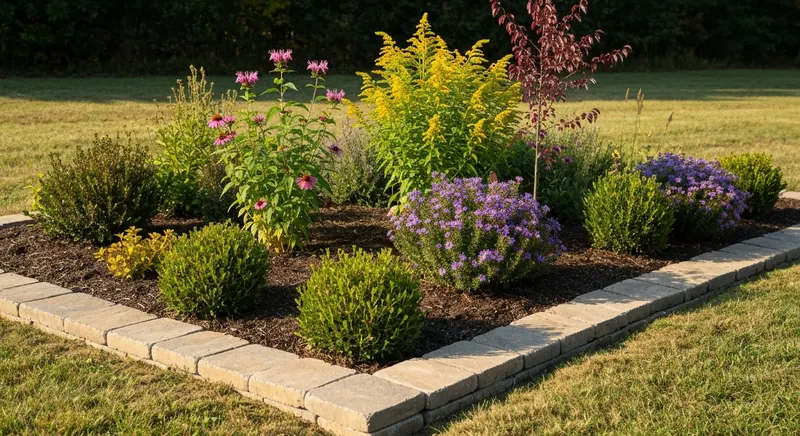
Now we can put plants back in their rightful place. Choose so-called mosquito repellent plants for what they truly deliver: beauty, fragrance, and pollinator value. Site brush-past herbs such as rosemary, lemongrass, basil, and catmint along paths and seating edges, where people crush a few leaves in passing and release the aromatic oils. Keep in mind that the citronella sold at most garden centers is usually a scented geranium rather than true citronella grass, so treat any single plant as one pleasant layer, never the whole plan. A few ornamentals, such as bromeliads and bamboo, also cup water in their leaves and should be flushed out about every five days. Paired with the water and airflow levers above, a thoughtful planting design does its part to keep mosquitoes at bay while making the yard more beautiful.
Putting it together: a Charlotte backyard you want to use at dusk
No single trick keeps mosquitoes away, but a layered design does a great deal. Design out standing water with smart grading, working gutters, and drainage. Keep water features moving. Lay out and space your seating so it catches a breeze, and add fans where you gather. Then let a beautiful, fragrant planting design round it out as one supporting layer. That is mosquito control landscaping the honest way, and it is exactly the design-build approach, rather than chemical fogging, that lets you reclaim the evenings you built your outdoor living space to enjoy. It is one more way we focus on Making Homes More Beautiful®.
Have more questions or want to get in touch? Our team designs and builds outdoor living spaces across Charlotte and the Carolinas, from grading and drainage to moving water features and thoughtful plantings. Visit our Contact Us page to book a design consultation, and we look forward to hearing from you.
Frequently asked questions
Do mosquito repellent plants actually work in a backyard?
Not simply by being planted. Their oils can deter mosquitoes only when crushed or extracted and then applied, so a growing shrub does little on its own. NC State Extension and University of Florida experts agree that repellent plants alone are not a reliable solution. Enjoy them for beauty and fragrance as one layer alongside standing-water removal and airflow.
What is the most effective way to reduce mosquitoes in a Charlotte yard?
Eliminate standing water. The Asian tiger mosquito, North Carolina's most common backyard species, breeds in small containers of stagnant water and stays close to where it hatched, so clearing plant saucers, clogged gutters, low spots, and birdbaths removes the breeding sites that matter most.
How fast do mosquitoes breed in standing water?
Fast. The U.S. EPA notes a mosquito can go from egg to biting adult in as little as about four days, typically around two weeks. Modeled against Charlotte's climate, undisturbed water can produce adults in roughly a week at peak summer, which is why emptying standing water every 4 to 5 days in the heat, and about weekly in spring and fall, is the safer habit.
Do fans keep mosquitoes away on a patio?
Yes, within the seating zone. Mosquitoes are weak fliers, and a fan both makes it hard for them to reach you and scatters the carbon dioxide they track. It reduces activity where the air is moving rather than clearing the whole yard, so it pairs well with permanent design levers.
Will a pond or water feature attract mosquitoes?
Only if the water sits still. Moving water from a fountain, waterfall, or aerator prevents larvae from developing, and a still ornamental pond can be treated with Bti mosquito dunks that are safe for fish and wildlife. Designed with circulation, a water feature is not a mosquito problem.
Which mosquito repellent plants have any real evidence?
As extracted oils, not as plantings. Catnip (nepetalactone) has the strongest laboratory evidence, while lemongrass oil (about 40 minutes) and rosemary oil (about 15 minutes) offer brief protection when applied to skin. None repel mosquitoes just by growing in the garden.
Citations
- NC State Extension "Mosquito Control Around Homes and in Communities" (updated 2020)
- University of Florida IFAS Extension "Florida experts break down the buzz on the myth of mosquito-repelling plants" (August 6, 2025)
- Clemson Cooperative Extension "Can Plants Repel Problematic Insects?" (June 2, 2025)
- International Journal of Molecular Sciences "A Safer Alternative Bio-Repellent: Targeting Mosquito Odorant-Binding Proteins with Catnip-Derived Nepetalactones" (February 5, 2026)
- U.S. Environmental Protection Agency "Mosquito Life Cycle" (updated January 23, 2026)
- Collier Mosquito Control District "Plant With Purpose: Simple Landscaping Tips to Deter Mosquitoes" (August 11, 2025)
- NC State Extension "The Buzz on Mosquitoes" (2020)
- North Carolina Department of Health and Human Services "NCDHHS Urges North Carolinians to Fight the Bite" (May 5, 2026)
- NOAA National Centers for Environmental Information "1991 to 2020 U.S. Climate Normals, Charlotte Douglas Airport (station USW00013881)" (climate-normals dataset)
- Kamimura et al., Medical Entomology and Zoology 53(1) "Development times of Aedes albopictus at different temperatures" (2002, development-rate parameters for the model)
- Delatte et al., Journal of Medical Entomology 46(1) "Influence of temperature on immature development of Aedes albopictus" (2009, development-rate cross-check for the model)
- University of California Agriculture and Natural Resources (UC IPM) "Mosquito Management for Ponds, Fountains, and Water Gardens" (July 1, 2024)
- American Mosquito Control Association "FAQs" (maintained reference, accessed July 2026)
Planning your own outdoor living upgrade? Explore our outdoor living services in Charlotte.