Herringbone Pavers vs Large Format Slabs Guide
Opening answer (BLUF)
When you compare herringbone pavers vs large format slabs, you are choosing the surface character of your outdoor room, not merely a product SKU. Herringbone lays rectangular units in a repeating V or zigzag that brings classic movement, rhythm, and tight interlock underfoot. Large-format slabs use bigger modular pieces (often 12 inches and up, and sometimes much larger) so joint lines thin out and the patio reads calm, open, and contemporary. For Charlotte entertaining patios, both can look beautiful and perform well when the base, drainage, and edge restraint are done correctly. The better choice is the one that matches the mood you want, the scale of the space, and how you gather outside.
Two surface languages for outdoor rooms
A patio is the floor of your outdoor living story. Furniture, dining, cooking, and conversation all sit on that plane. Pattern and scale set the first impression before anyone notices a fire feature or outdoor kitchen.
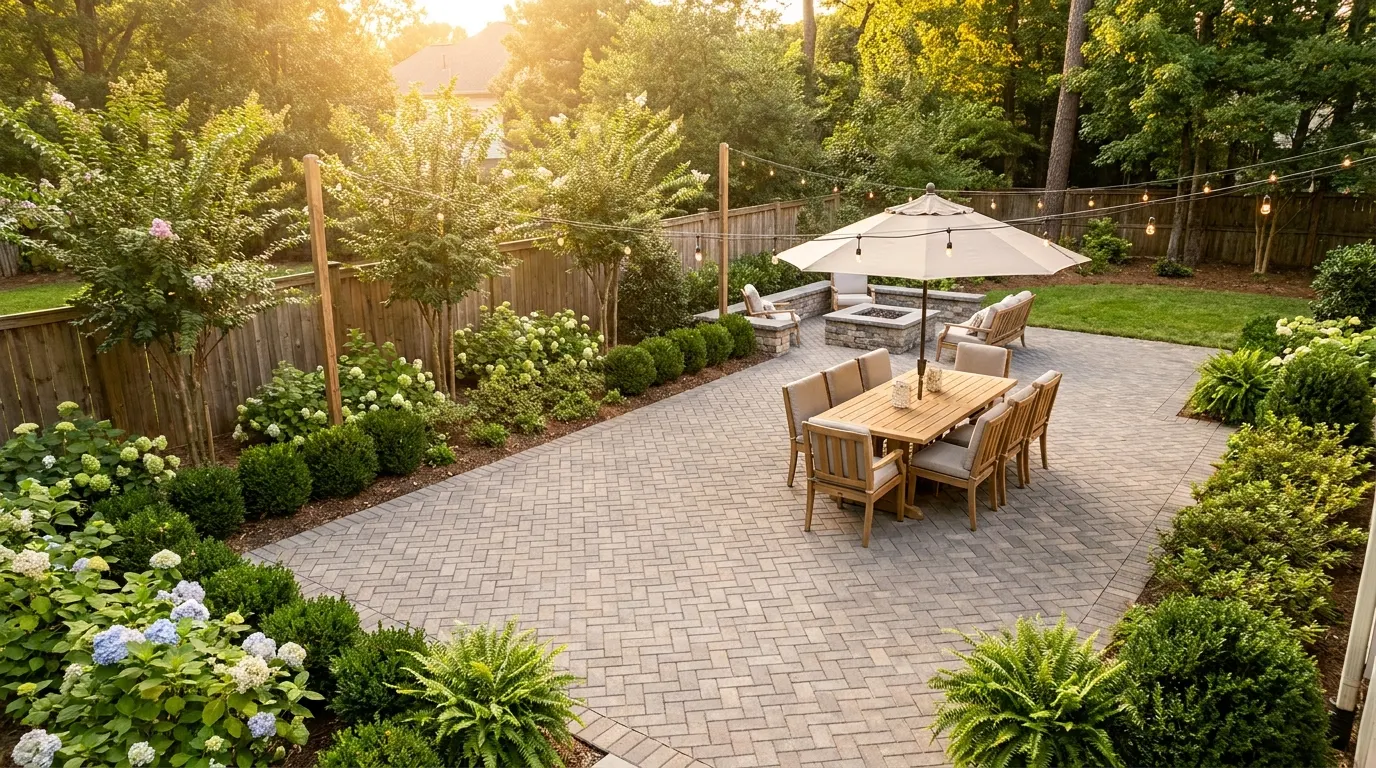
Herringbone is the patterned language. Rows of rectangular pavers meet at 45 or 90 degrees and form a continuous zigzag. Manufacturers and installers have long favored this layout for high-use surfaces because the crisscross geometry helps lock units together and creates visual energy across the field.[1] Guests often sense movement and craftsmanship without needing a design vocabulary for it. The surface feels traditional, tailored, and intentional, which pairs well with brick, board-and-batten, craftsman details, and many classic Charlotte neighborhoods.
Large-format slabs speak a quieter language. Oversized modular pavers and planks reduce the number of joint lines, so the eye travels farther before it meets a seam. That spacious, less-busy look is a direction Belgard was already flagging in 2017 for contemporary outdoor rooms, and natural-stone producers make a similar design case for larger units where clean planes and open volume matter.[2][3] The effect is often described as calm, modern, or resort-like: a generous plane for dining tables, lounge groupings, and open circulation.
Neither option is a consolation prize. Both are design decisions that define how your outdoor room feels at a glance and how it photographs at dusk when string lights and a soft Carolina evening pull people outside.
Herringbone: classic movement and structural interlock
Herringbone earns its reputation twice: once for beauty, and again for performance in a patterned field.
Visual character
The zigzag produces rhythm. It can run with the length of a patio to stretch the space, or turn at 45 degrees for a more dynamic diagonal field. Rectangular units (often brick-scale or similar modular sizes) keep the pattern readable. You can frame the field with a soldier course or contrasting border so the pattern feels finished where it meets lawn, steps, or walls.
That same rhythm works well when you want the patio to feel like a destination rather than a plain pad. Entertaining zones with dining, grilling, and seating benefit from a surface that already has personality, so furnishings do not have to carry all of the design interest.
Performance character
Industry guidance for interlocking concrete pavement points to 45° or 90° herringbone patterns where continual traffic loads demand maximum interlock and structural performance.[4] Trade educators also describe the interlocking layout as especially durable in high-traffic and freeze-thaw contexts because the crisscrossing joints resist lateral shift better than long, unbroken joint lines.[1] For a residential patio that hosts carts, heavy furniture, and frequent foot traffic, that multi-directional lock is a practical design bonus, not just a technical footnote.
Quality interlocking concrete pavers manufactured to North American product standards are dense, high-strength units. ASTM C936, the U.S. specification for solid interlocking concrete paving units, calls for a minimum average compressive strength of 8,000 psi (55 MPa), with no individual unit below 7,200 psi.[5] Those strength criteria sit alongside absorption and durability requirements that support long service in outdoor weather when installation follows best practice.
Where herringbone shines in Charlotte homes
Choose herringbone when you want:
- A classic or transitional look that complements traditional architecture
- A patio that feels lively even before furniture is placed
- Strong pattern interest on mid-size entertaining decks and courtyards
- Clear definition between cooking, dining, and lounge zones through borders or pattern turns
Herringbone also pairs well with outdoor kitchens and covered living areas when you want the hardscape to feel as considered as the cabinetry and lighting. The pattern reads as intentional craftsmanship, which matches a full outdoor living investment.
Large-format slabs: calm scale and open-air modern
Large-format slabs and planks are the modern alternative when you want fewer seams and a quieter floor plane.
Visual character
Bigger modules reduce visual clutter. In 2017 Belgard was already documenting large-format patio design for homeowners who prefer contemporary lines, European-influenced outdoor rooms, or simply a less busy surface that makes modest yards feel larger.[2] Natural stone producers make a similar design case for XL units: fewer joint lines, a more continuous look, and a strong sense of scale that can make outdoor rooms feel more generous.[3]
Texture still matters. Large units can mimic slate, limestone, or cut stone, or they can present a smoother modular finish. Color blends can stay subtle for a monolithic field, or you can introduce a border, step treads, or a second module size so the layout does not feel flat.
Performance and installation character
Large units still depend on a prepared base and careful setting. Industry technical notes for segmental concrete paving slabs and planks treat these products as their own design family, with structural guidance separate from small interlocking units.[6] In practice, that means the base must be true, bedding consistent, and handling planned so edges stay supported and lippage stays low. Large pieces reward precision: when the plane is right, furniture sits level and the eye reads a continuous outdoor floor.
Polycor’s design guidance for large stone pavers also stresses substrate preparation, traffic patterns, color harmony with the architecture, and thoughtful size mixes when you want interest without a busy field.[3] The same principles apply when Charlotte homeowners choose concrete large-format systems from lines we regularly install: plan the base for local soils and drainage, choose module scale for the room size, and detail edges so the field holds its geometry for years of entertaining.
Where large-format slabs shine
Choose large-format slabs when you want:
- A calm, contemporary, or resort-inspired outdoor room
- Visual spaciousness on compact or mid-size lots
- Clean lines that let furniture, plantings, and architecture lead
- A surface that feels open under long dining tables and lounge sets
Large-format fields also photograph beautifully for modern homes with glass, black window frames, and simple massing. The patio becomes a quiet stage rather than a patterned feature.
Material, scale, and pattern choices that fit Charlotte entertaining
Charlotte outdoor living rewards surfaces that handle humidity, summer storms, winter freezes, and clay soils when the system under the pavers is built correctly. Pattern and module size sit on top of that foundation. Industry application guidance for interlocking concrete pavements recommends 2 3/8 in. (60 mm) thick units for typical pedestrian and residential driveway use, with aggregate base thickness scaled to soil, climate, and traffic (often in the range of several inches of compacted base for walks and thicker for heavier loads).[4] Those details are not marketing language. They are the difference between a patio that stays flat through seasons of cookouts and one that telegraphs every soft spot in the subgrade.
Match scale to the room
- Intimate courtyards and side yards: Smaller modules or herringbone can add interest without oversized pieces dominating a narrow footprint.
- Main entertaining patios: Either language works. Herringbone brings energy; large slabs bring calm. Measure furniture footprints and circulation paths so joints and pattern lines support how people move.
- Open modern yards: Large-format fields often look most natural when the house already uses wide windows and simple volumes.
- Traditional elevations: Herringbone, brick-scale rectangles, and bordered fields often feel more at home.
Designers also note that rectangular large formats can create directional flow, while square large formats can read more like a quiet grid or checkerboard.[3] Scale is part of composition, not only square footage.
Choose pattern with purpose
For herringbone:
- 45° fields often feel more dynamic and can help disguise minor directional bias in a yard.
- 90° fields often feel more ordered and can align cleanly with house walls and edges.
- Borders give the pattern a crisp finish and help manage cuts at curves and steps.
For large-format layouts:
- Stacked bond emphasizes calm grids.
- Running bond or half-bond softens the grid and can guide the eye along a dining or lounge axis.
- Mixed module sets (two or three sizes) can create a tailored field that still feels quieter than a small cobble pattern.
Think about joints as design, not leftover space
Joint lines are part of the composition. Herringbone multiplies them into a rhythmic network. Large-format slabs reduce them into a lighter sketch. Both approaches can include polymeric joint materials and edge restraints so the surface stays tight. Industry guidance treats edge restraint as essential: the field and bedding stay interlocked because the perimeter holds them.[4] That is true whether the surface character is zigzag energy or slab calm.
Coordinate with outdoor kitchens and living features
Entertaining patios often include cooking, dining, and lounge zones. Surface character can support that zoning:
- Herringbone can turn or change direction to signal a dining room versus a lounge.
- Large-format slabs can stay continuous while furniture and overhead structure do the zoning.
- Borders, steps, and seat walls can frame either surface so the patio feels complete as a room.
If you are planning a full hardscape package, our custom paver patio design and installation work in Charlotte starts with how you want to live outside, then matches pattern, product, and base construction to that vision.
Herringbone pavers vs large format slabs: a practical side-by-side
Use this comparison as a design checklist, not a scorecard.
| Decision factor | Herringbone pavers | Large-format slabs | | --- | --- | --- | | Mood | Classic movement, craft, rhythm | Calm openness, modern quiet | | Joint density | Higher, patterned network | Lower, longer sight lines | | Structural interlock in patterned fields | Strong multi-directional lock, favored for heavy use fields[1][4] | Depends more on unit size, base quality, and setting method; treated under slab/plank guidance[6] | | Furniture and dining | Pattern adds interest under tables and chairs | Broad planes feel open under large dining sets | | Architecture fit | Traditional, transitional, many brick homes | Contemporary, modern, European-inspired exteriors | | Visual spaciousness | Rich detail; can feel lively in smaller yards | Often used to make spaces feel larger and less cluttered[2][3] | | Installation craft | Angle control, consistent V lines, thoughtful borders | Levelness, handling of large units, true base plane |
Many Charlotte homes blend both languages successfully: a large-format main field with a herringbone band, or a herringbone patio with large-format steps and landings. The goal is a coherent outdoor room, not purity for its own sake.
How Charlotte lifestyle shapes the choice
Outdoor entertaining here runs from spring dinners to late summer gatherings and mild winter evenings by the fire. Surfaces need traction when humidity sits in the air, stability through wet seasons, and a finished look that still feels inviting after years of use. Interlocking systems excel because individual units share load through joint sand and can be lifted and reset if utilities or future renovations require access, a benefit industry literature notes relative to monolithic slabs that rely on continuous material integrity.[4]
That flexibility supports long-term outdoor living investments. Whether you choose herringbone movement or large-format calm, the surface can evolve with your home: add an outdoor kitchen later, extend a lounge pad, or introduce a fire feature without treating the patio as a one-and-done pour.
Color selection matters in Carolina light. Lighter and mid-tone blends keep summer glare friendlier under open sky. Deeper tones can ground a modern palette or hide leaf litter in wooded lots. Texture should stay walkable in wet conditions; slip-resistant finishes are part of thoughtful outdoor design for pool edges, kitchen paths, and steps.
Practical takeaways
- Start with mood. Decide whether you want classic patterned energy (herringbone) or calm modern scale (large-format slabs). That decision clarifies everything else.
- Scale the surface to the room. Small courtyards can feel crowded by oversized units; large entertaining pads can feel under-detailed with only tiny modules unless pattern is intentional.
- Respect the system under the surface. Product quality and pattern choice only perform when base compaction, bedding, drainage, and edge restraint meet professional standards.[4][5]
- Use pattern as zoning. Borders, direction changes, and module mixes can define dining, cooking, and lounge areas without walls.
- Match architecture honestly. Traditional homes often love herringbone; contemporary homes often love large-format fields. Transitional homes can blend both.
- Plan furniture and circulation first. Measure tables, grill clearance, and walking paths so joint lines and pattern flow support real entertaining.
- Think long-term outdoor living. Choose a surface character you still want when you add shade, a kitchen, or lighting later.
- Hire craft, not just materials. Herringbone angles and large-format planes both reward experienced layout, cutting, and compaction.
How we can help
At Mr. Outdoor Living, we design and install custom paver patios for Charlotte-area homeowners who want outdoor rooms that feel finished, welcoming, and ready for real entertaining. We work with premium hardscape systems and install for local soils, drainage, and year-round use so the surface character you choose holds its look over time.
Whether you lean toward herringbone rhythm, large-format calm, or a tailored mix, we help you sample products in context, plan scale and borders, and build a patio that supports dining, lounging, and outdoor cooking as one coherent space. Explore our Charlotte paver patio services, or reach out to schedule a design conversation. We would be glad to walk your yard, talk through herringbone pavers vs large format slabs, and sketch a surface that fits how you live.
Citations
[1] Unilock. "Herringbone Paver Pattern: A Classic Hardscape Style." https://unilock.com/design/herringbone-paver-pattern/
[2] Belgard. "Patio Design Trends: Large-Format Pavers." https://www.belgard.com/outdoor-living/patios/patio-design-trends-large-format-pavers/
[3] Polycor. "Large Stone Pavers for Patios & Walkways." https://www.polycor.com/stone-pavers/large-pavers/
[4] Concrete Masonry & Hardscapes Association (CMHA). "Application Guide for Interlocking Concrete Pavements" (PAV-TEC-010). https://www.cmha.org/resource/pav-tec-010/
[5] Concrete Masonry & Hardscapes Association (CMHA). "Capping and Compression Strength Testing Procedures for Concrete Pavers" (PAV-TEC-021), citing ASTM C936. https://www.cmha.org/resource/pav-tec-021/
[6] Concrete Masonry & Hardscapes Association (CMHA). "Structural Design of Segmental Concrete Paving Slab and Plank Pavement Systems" (PAV-TEC-024). https://www.cmha.org/resource/pav-tec-024/
Planning your own outdoor living upgrade? Explore our outdoor living services in Charlotte.