Overseed or Switch to Turf? The Charlotte Homeowner's Fall Lawn Decision
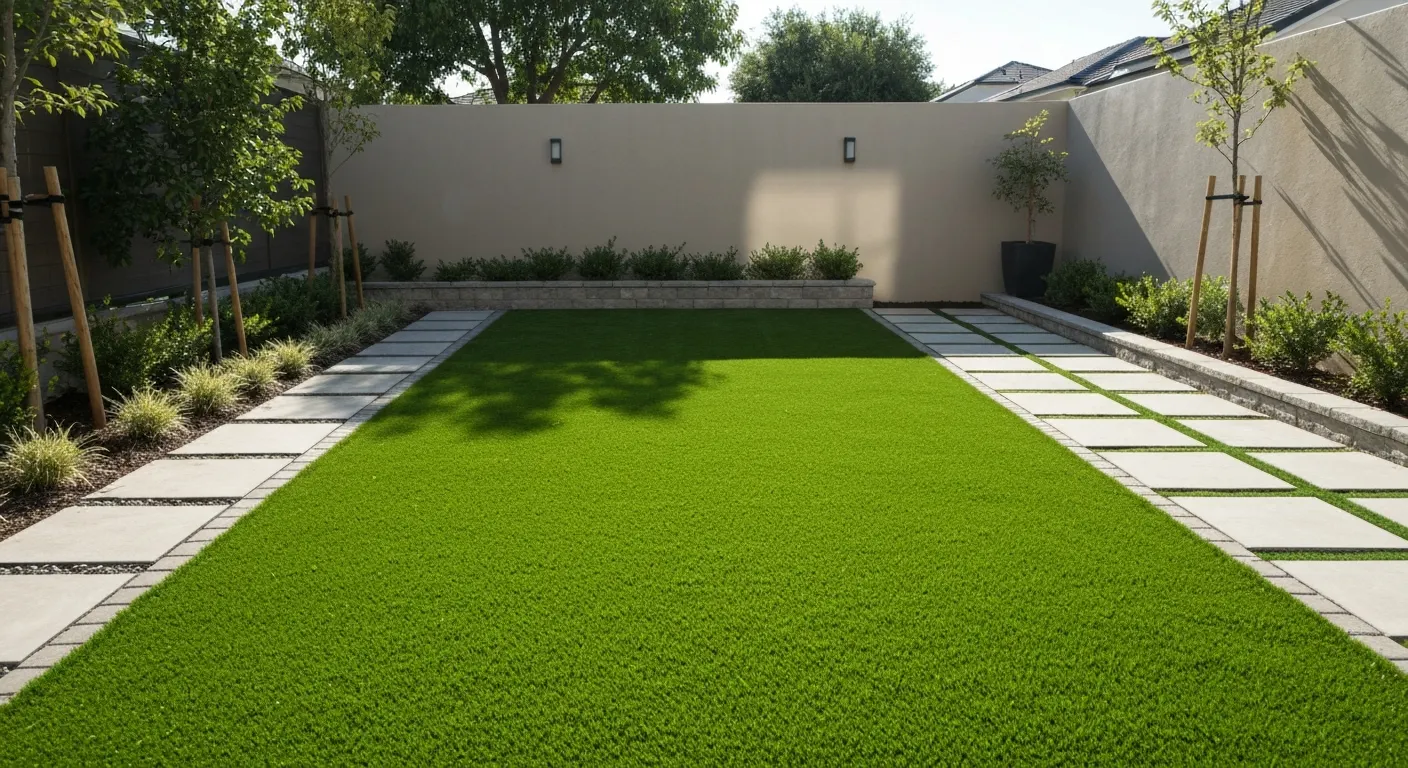
Every fall, Carolina homeowners get to make one of the most satisfying design decisions in the yard: refresh a healthy tall fescue lawn so it comes back thick and green, or make the move to artificial turf for a flawless surface that stays put all year. The right answer is not the same for every property, because it is really a decision about your site. Where a lawn can genuinely thrive, fall is the season it rewards you most, and fescue overseeding Charlotte is the move that keeps it lush and cool underfoot. Where the ground works against grass, artificial turf gives you a green that never quits. Here is how to choose the surface that fits your yard, and why late July is the moment to decide.
It is a site decision, not a grass-versus-turf debate
Most advice treats this as one verdict for everyone, but it is not. In the Charlotte and Carolina Piedmont transition zone, the smart question is not which surface is best, it is which surface fits this yard. Good sun, a manageable slope, and normal traffic point to a lawn waiting to look its best. Deep shade, steep erosion-prone slopes, or a corner the dog and the kids never let recover point somewhere else. Many Carolina yards are honestly both, with a beautiful fescue lawn where it thrives and artificial turf exactly where grass keeps losing.
Choose fescue overseeding when your Charlotte lawn wants to grow
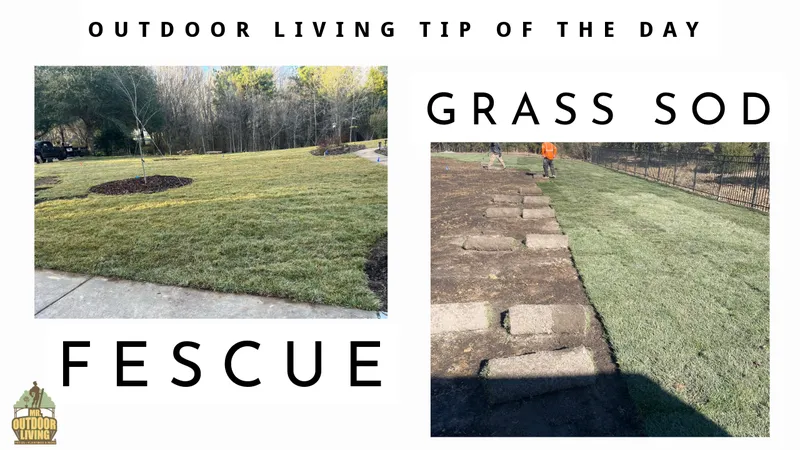
Tall fescue is the most widely grown cool-season grass in North Carolina, and it is a transition-zone favorite because it holds rich color through the cool months and tolerates light shade better than warm-season grasses (NC State Extension). Its moment is fall. As the Piedmont cools, air temperatures settle into the 68 to 77 degree range that fescue germinates best in, with soil still warm above 60 degrees, and new seed comes up in about 10 to 21 days (NC State TurfFiles).
That is why the calendar matters, and it is an opportunity rather than a chore. Overseed thin or bare areas as the grass responds to cooler temperatures in September and early October, and aim to have seed down by mid-October before germination odds drop off sharply (Clemson Cooperative Extension; NC State TurfFiles). A little planning turns that window into a thick, green spring.
The method reads like a simple recipe for a great lawn. Core aeration before seeding relieves compaction and gives seed good contact with the soil, then a turf-type tall fescue goes down at about 5 to 6 pounds per 1,000 square feet (NC State TurfFiles, with Clemson recommending a tall fescue blend at 6 pounds per 1,000). A soil test guides fertility, and when you do not have one, a starter fertilizer high in phosphorus at seeding helps the new grass establish (Clemson HGIC).
Water is the honest trade for a living surface, and it is a decision input, not a problem. An established fescue lawn drinks roughly 1 to 1.25 inches of water a week, enough to wet the soil 4 to 6 inches deep, and a fresh seedbed wants lighter, more frequent watering until it roots in (Clemson HGIC). That is what cool, green, breathing ground asks for through a Carolina summer, and a well-designed irrigation system makes it effortless. If your site can give a lawn that sun and water, fescue overseeding is the cooler, more living, lower up-front choice.
Choose artificial turf when your site fights back
Here is the honest other half, because a good decision guide cuts both ways. In the transition zone, tall fescue genuinely struggles through peak summer heat, and because of its bunch-type growth it may need to be re-seeded each year where summer stress thins it (NC State Extension). Even the most shade-tolerant fescue goes sparse in deep shade. On those sites, overseeding is a yearly uphill battle, and forcing grass where it cannot grow is a standing chore, not a design win.
That is where artificial turf shines. It is site-agnostic and durable, staying flawlessly green in deep shade, on steep slopes prone to erosion, in high-traffic pet and play zones, and in the chronic bare spots that never fill in. It sidesteps the weekly watering a lawn needs, which is a real benefit in a region where outdoor use accounts for more than 30 percent of household water on average (up to 60 percent in arid climates) and as much as 50 percent of the water we use outdoors is lost to wind, evaporation, and runoff (U.S. EPA WaterSense). Where your site fights back, turf turns a losing battle into a surface you simply enjoy.
The honest trade-offs, in both directions
Neither surface is perfect, and the fair way to choose is to look straight at the trade-offs and their counters.
Turf runs hotter in full sun, but the heat-stress picture is nuanced
In direct sun, artificial turf gets hotter to the touch than living grass. A 2024 peer-reviewed systematic review measured synthetic surfaces reaching up to 86.6 degrees Celsius versus 65.1 degrees for natural grass (International Journal of Biometeorology), and University of Florida (IFAS) researchers found turf hitting about 79 degrees Celsius (174 degrees Fahrenheit) on the hottest days while natural turf stayed closer to 39 degrees Celsius (102 degrees Fahrenheit) thanks to evapotranspiration and shade (reported by UF/IFAS).
The counter matters just as much. That same 2024 review concluded it is uncertain whether the difference is enough to raise a person's heat-stress risk, because the wet-bulb globe temperature, a standard heat-stress index, was very similar between synthetic and natural grass (International Journal of Biometeorology). The fair reading is straightforward: measurably hotter to the touch in full sun, but not a proven health hazard. If a play zone sits in all-day sun, that is a reason to shade it or keep a lawn there, not to rule turf out everywhere.
Turf saves water, with one honest asterisk
Turf's near-zero irrigation is a genuine advantage, but it is not absolute. In extreme heat, some owners end up hosing turf down just to make it comfortable to use, which can offset part of the very water savings that justified installing it (UF/IFAS observed). It is a small asterisk on a real benefit, and worth knowing before you decide.
Plan for the end of life, and know the picture is improving
Most artificial turf still ends up in a landfill when it wears out. A 2025 investigation found discarded turf frequently abandoned rather than recycled, and that older fields have been shown to contain PFAS, the so-called forever chemicals (The Philadelphia Inquirer). The counter is that turf recycling programs are beginning to emerge, so this is a factor to plan for at installation, choosing quality product and a reputable installer, rather than a reason to rule turf out.
Cost: a recurring investment versus a one-time one
The clearest way to compare cost is by its shape, using independent third-party ranges. A fall lawn refresh is a smaller recurring seasonal investment: third-party estimates put core aeration around 15 to 18 dollars per 1,000 square feet (roughly 150 to 250 dollars for a typical professional aeration), with overseeding adding about 500 to 1,500 dollars depending on yard size and seed (Today's Homeowner). Artificial turf is a larger one-time investment, commonly cited in a wide third-party range of roughly 6.50 to 20 dollars per square foot installed, with one national cost estimator putting a small-area install around 16 to 20 dollars per square foot in May 2026 (Homewyse). The range is wide on purpose, because turf cost genuinely varies with quality, base prep, and site complexity. These are third-party figures for context only, never a Mr. Outdoor Living price.
| Consideration | Fescue overseeding | Artificial turf |
|---|---|---|
| Best for | Good sun, manageable slope, normal traffic | Deep shade, steep slopes, heavy pet or play traffic, chronic bare spots |
| Look and feel | Cool, living surface that greens up in fall | Flawless green year-round, hotter to the touch in full sun |
| Watering | About 1 to 1.25 inches per week once established | Near zero, though some owners rinse it to cool it in extreme heat |
| Upkeep cadence | Seasonal renovation each fall (aerate, overseed, feed) | Occasional rinsing and brushing, no mowing |
| Cost shape (third-party ranges) | Recurring: about 15 to 18 dollars per 1,000 sq ft aeration, plus about 500 to 1,500 dollars overseeding | One-time: roughly 6.50 to 20 dollars per sq ft installed |
| End of life | Grows back, clippings compost | Plan for eventual replacement and disposal, recycling emerging |
Your late-July decision timeline
Late July is the sweet spot to decide, and deciding now is what makes fall easy. The Piedmont overseed window runs roughly mid-September to early October, and the prep that makes it succeed, a soil test, booking core aeration, and sourcing quality seed, wants about 6 to 8 weeks of lead time. Choose now and you walk into fall with a plan to refresh your fescue, or you commit to turf and design it before the season fills up.
The decision itself is a short walk around your yard. Notice how many hours of real sun the thin spots get, where slopes run steep, and which corners the dog and the kids never let recover. If most of the lawn gets good sun and reasonable traffic, fescue overseeding is the cooler, living, lower up-front choice. If the same bare spots lose the battle every single year, artificial turf is the durable answer for those zones. Plenty of Charlotte-area yards land on both.
Plan your fall lawn with Mr. Outdoor Living
Not sure which way your yard leans? That is exactly what a landscape consultation is for. Our team can look at your sun, slope, soil, and how you actually use the space, then map the right mix of artificial turf, sod, plantings, irrigation, and landscaping for your property across Charlotte and the surrounding Carolinas, including Fort Mill, SC. Contact Mr. Outdoor Living to plan your fall lawn before the overseeding window opens.
Citations
- NC State Extension (TurfFiles), "Time for Fall Seeding of Tall Fescue" (updated February 26, 2026).
- Clemson Cooperative Extension (HGIC), "Tall Fescue Maintenance Calendar" (updated August 2024).
- NC State Extension, "Tall Fescue" (August 22, 2022).
- U.S. EPA WaterSense, "Statistics and Facts" (updated March 11, 2026).
- International Journal of Biometeorology (via PubMed Central), "The effect of synthetic grass sports surfaces on the thermal environment: A systematic review" (May 2024).
- The Invading Sea (UF/IFAS Communications), "Scorching temps raise questions about artificial turf in humid states like Florida" (August 14, 2025).
- Today's Homeowner, "How Much Does Lawn Aeration Cost?" (updated March 21, 2025).
- Homewyse, "Cost to Install Artificial Lawn" (May 2026).
- The Philadelphia Inquirer, "Recycle company's bankruptcy leaves tons of discarded artificial turf across the state" (September 30, 2025).
Planning your own outdoor living upgrade? Explore our outdoor living services in Charlotte.